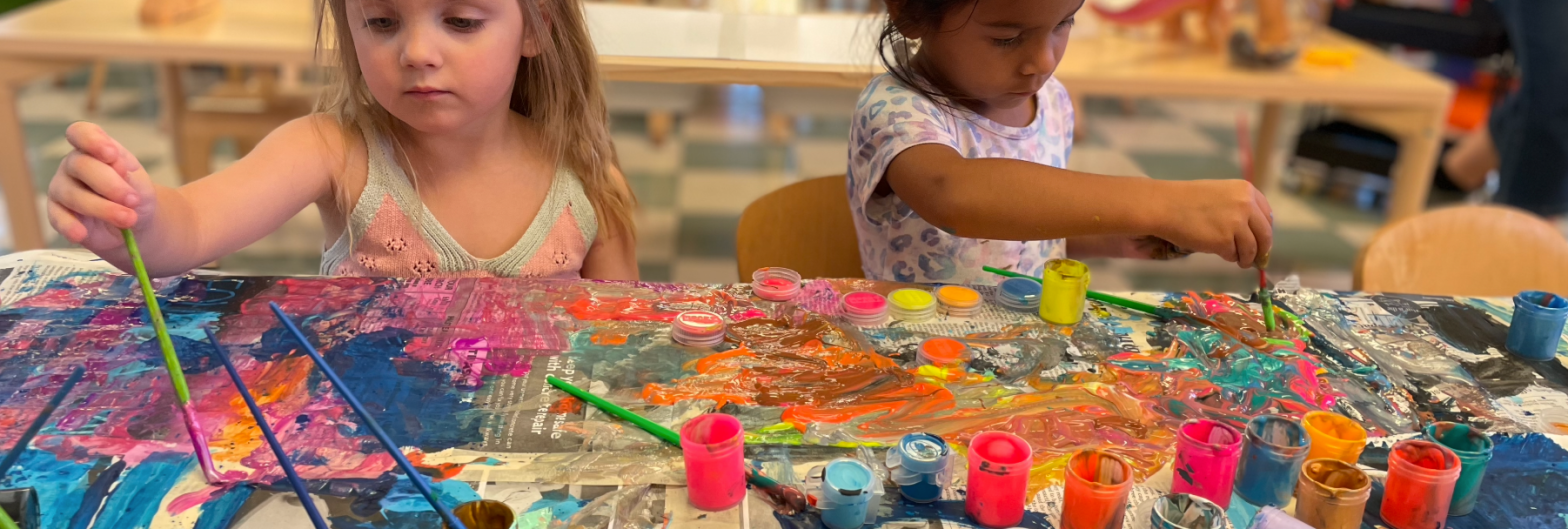
100 degree playground, feeding baby animals, making brown and blowing bubbles: THURSDAY B WEEK

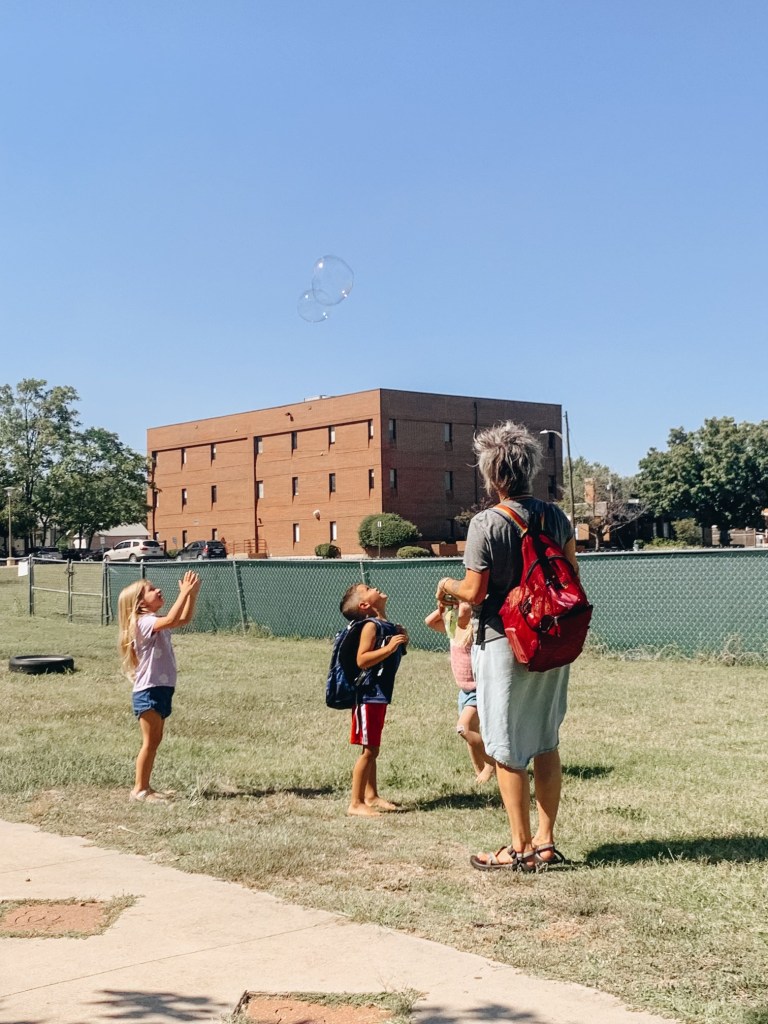
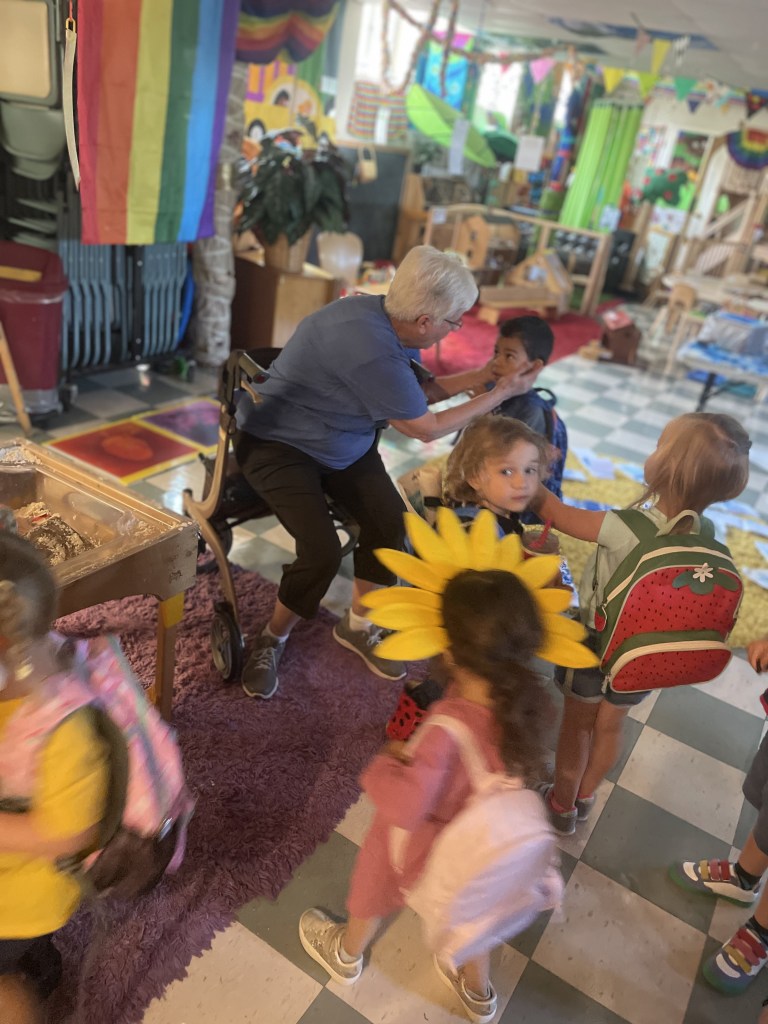
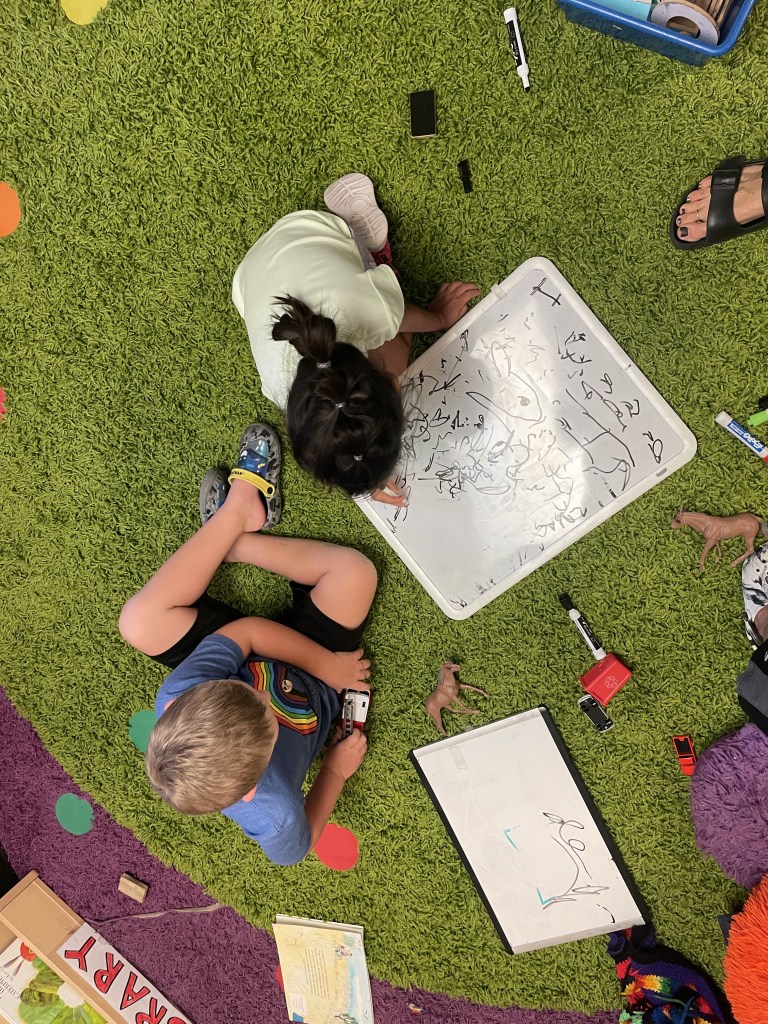
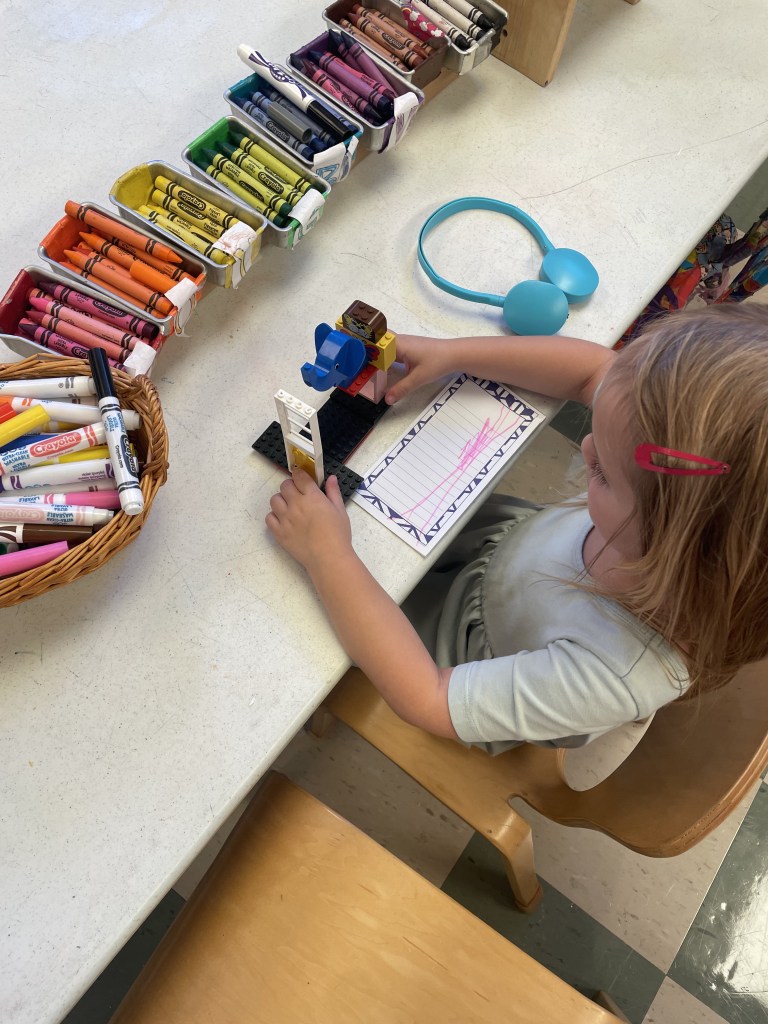
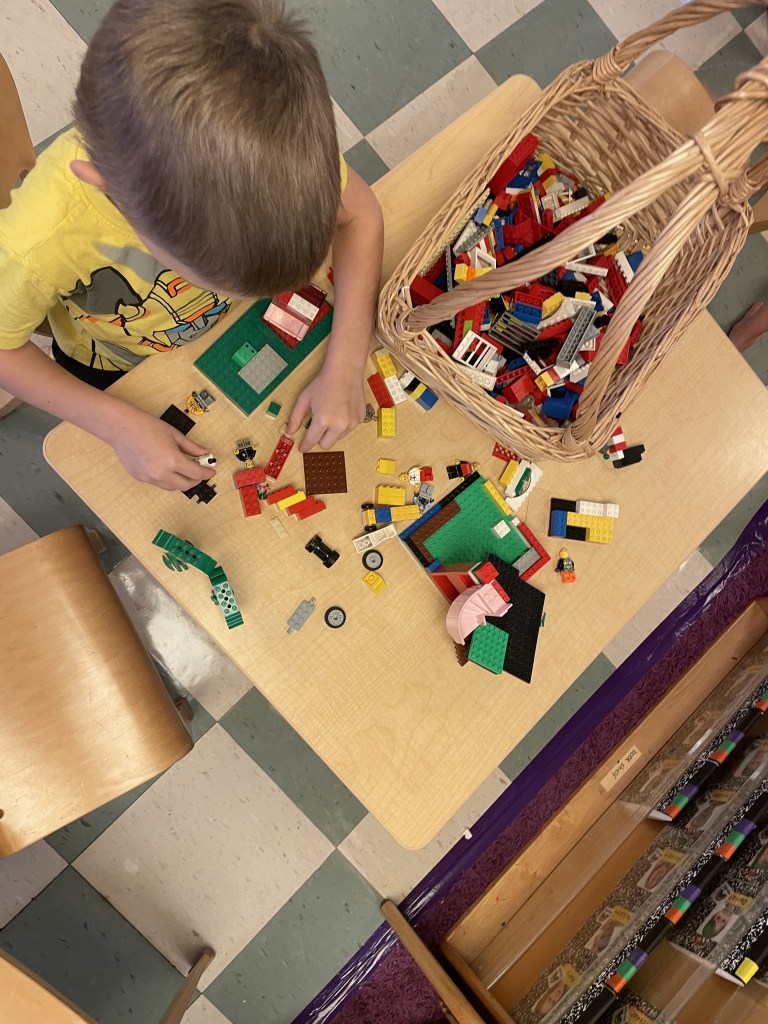
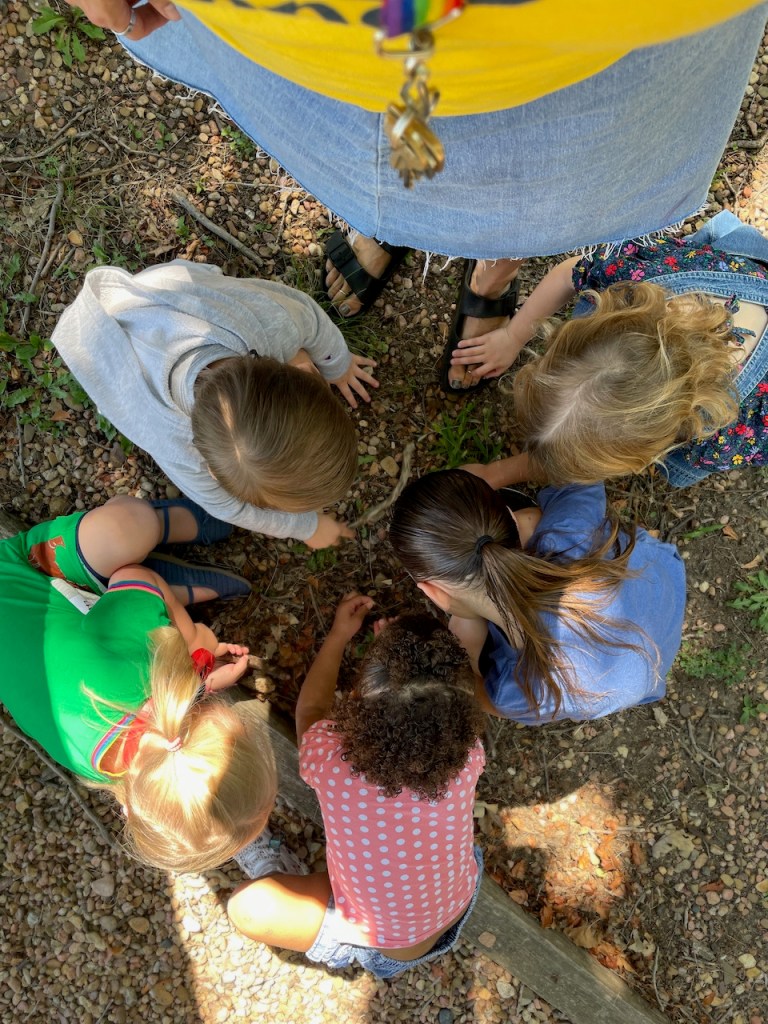
We had a warm Thursday with the temperature getting to over 100 on our playground! Thank you to our volunteers today Grandpa Kelven and Ms/Grandma Mona! I am so grateful! We balanced with babies, built with blocks, bounded after bubbles and breezed through the day.

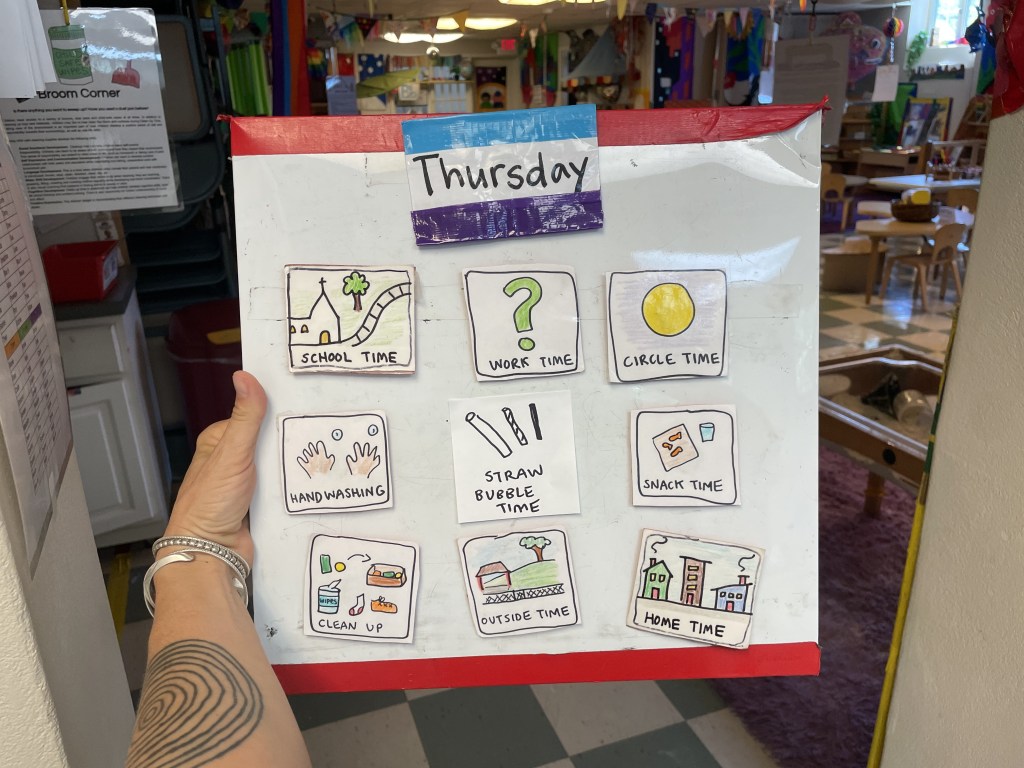
Here are some questions to find out about our day:

What kind of bubbles were on the playground today?
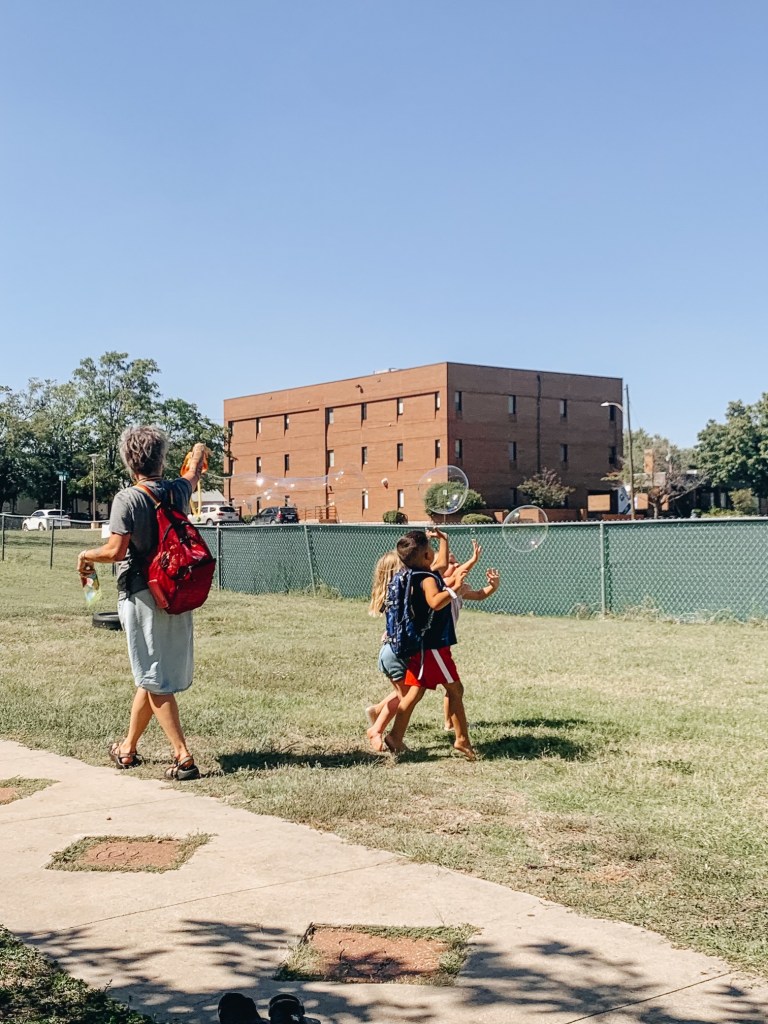
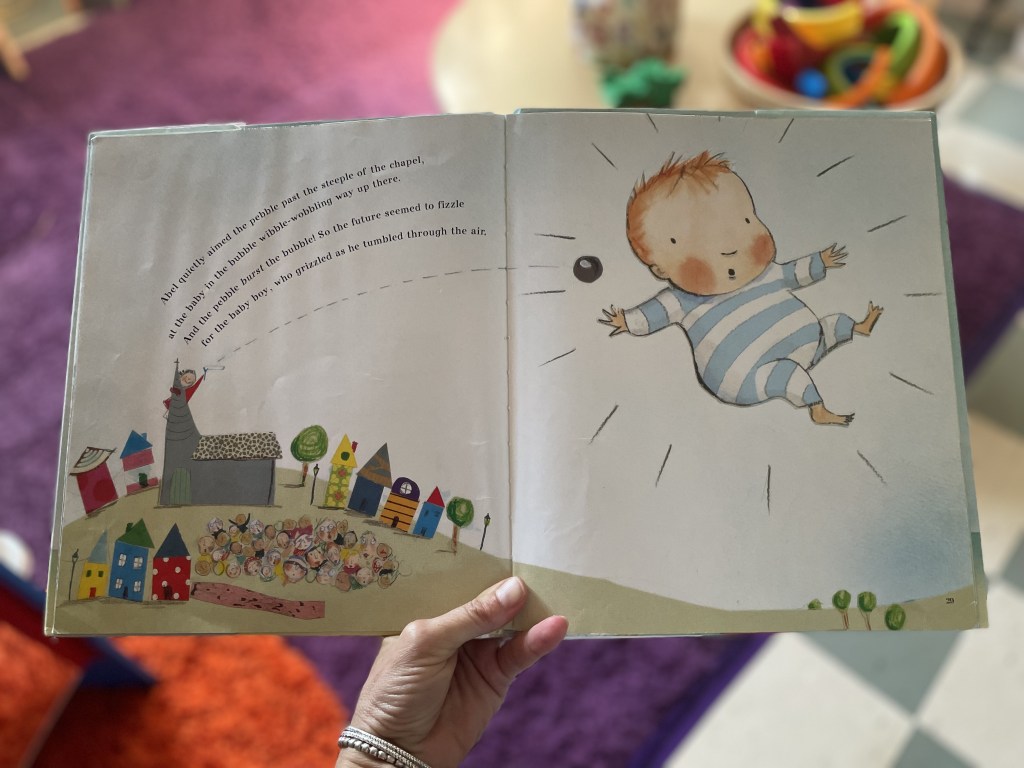
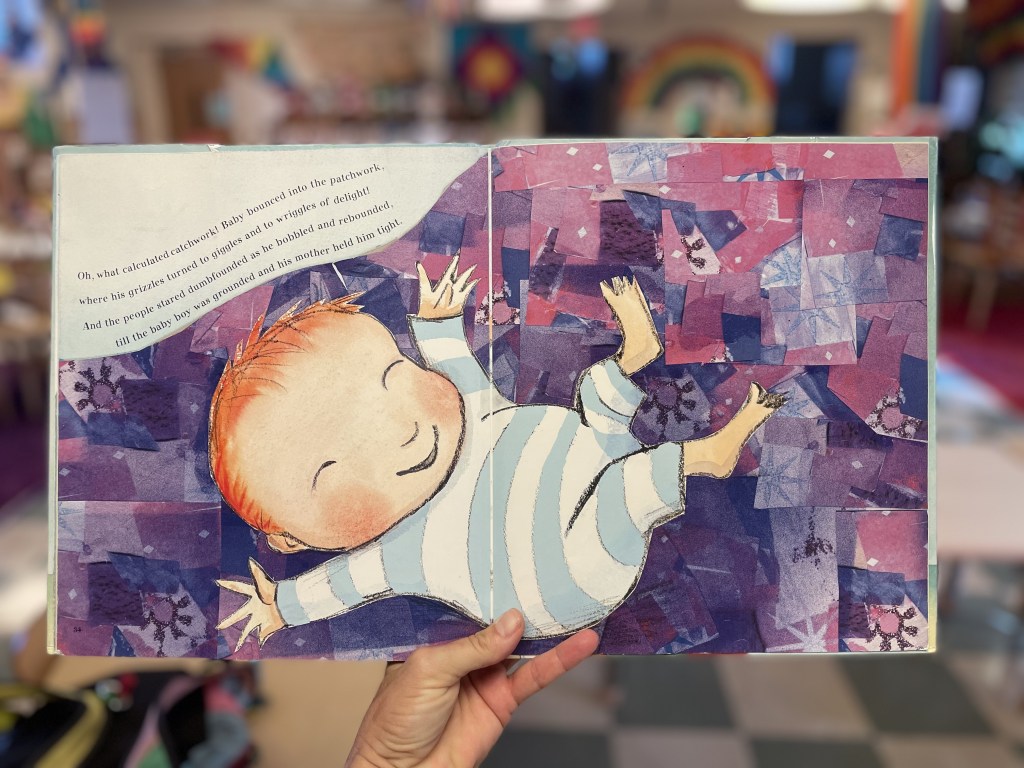
BIG ones! Ms Kristin got the fancy bubble-hand-bubble-in-a-bag thing to work that she’s had in her office for years. We imagined what if the baby was in the bubble just like our book. Thank you for others taking pictures and sending them to me!
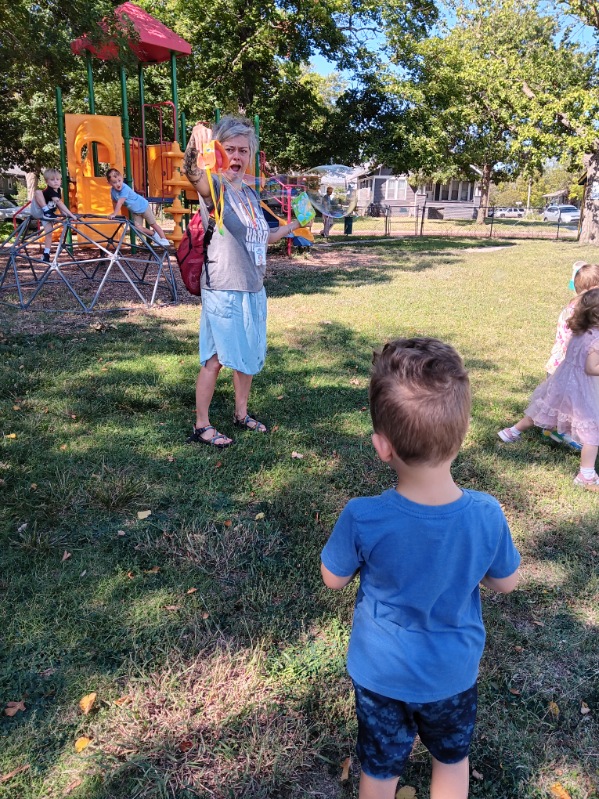
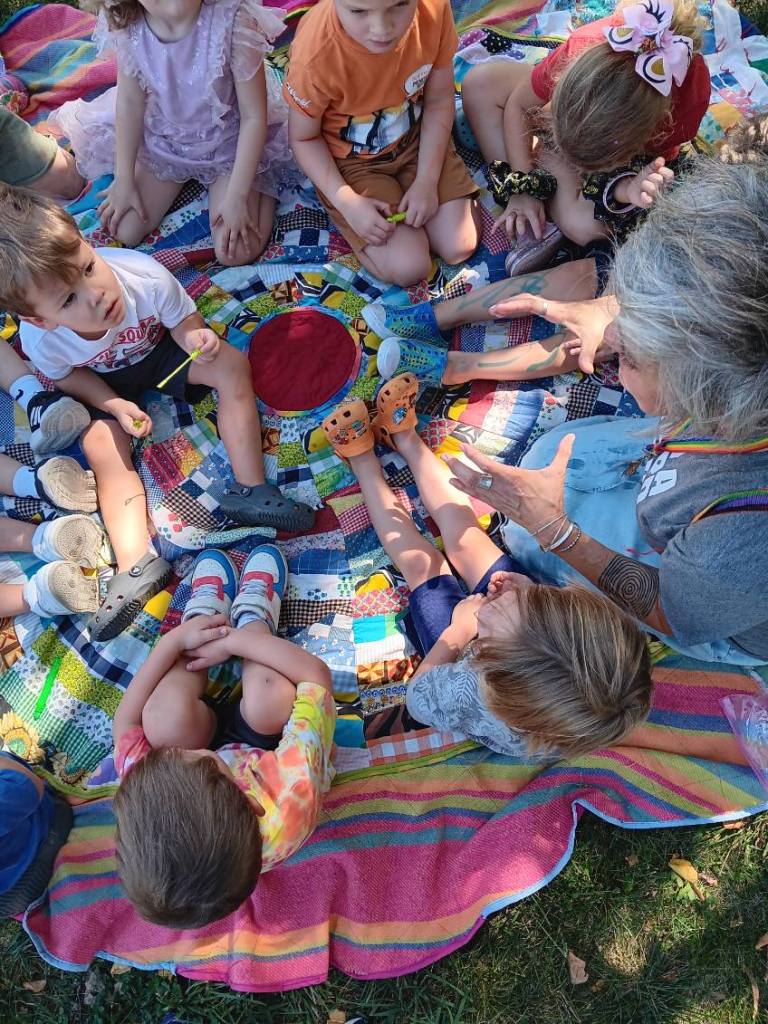
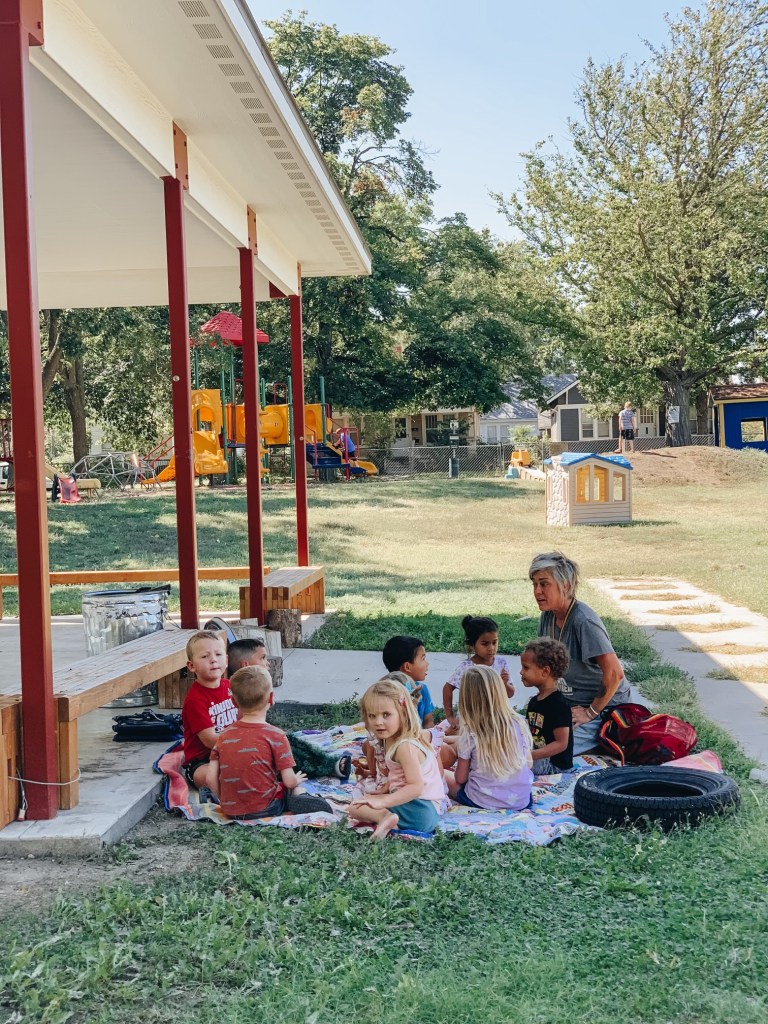
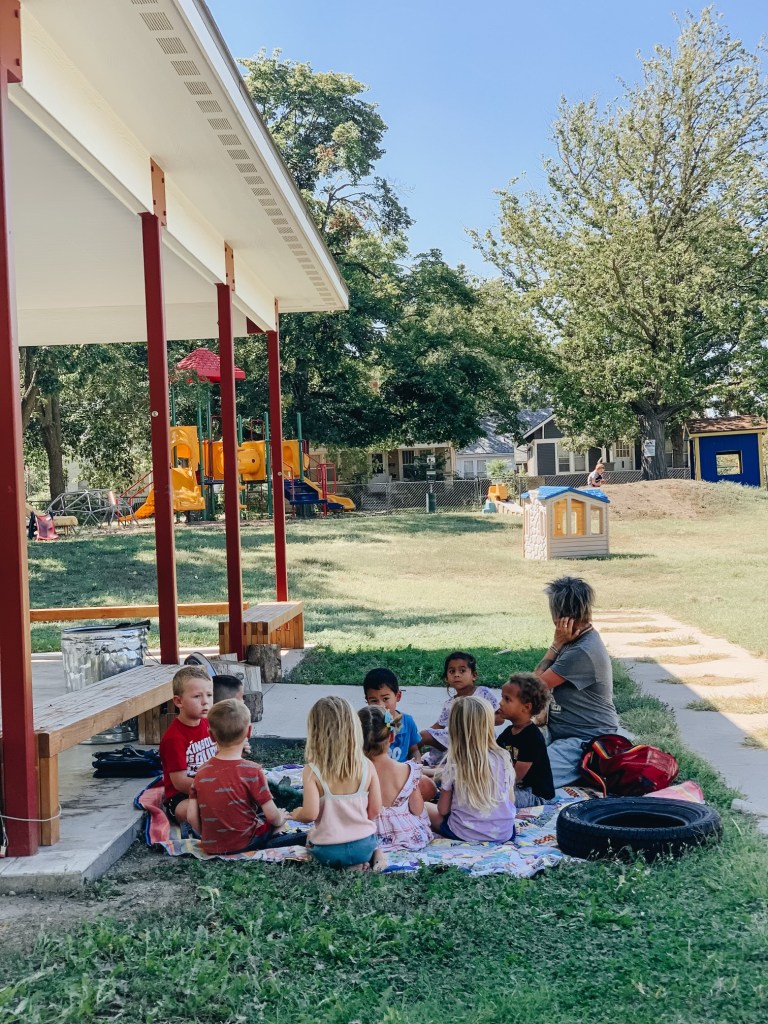
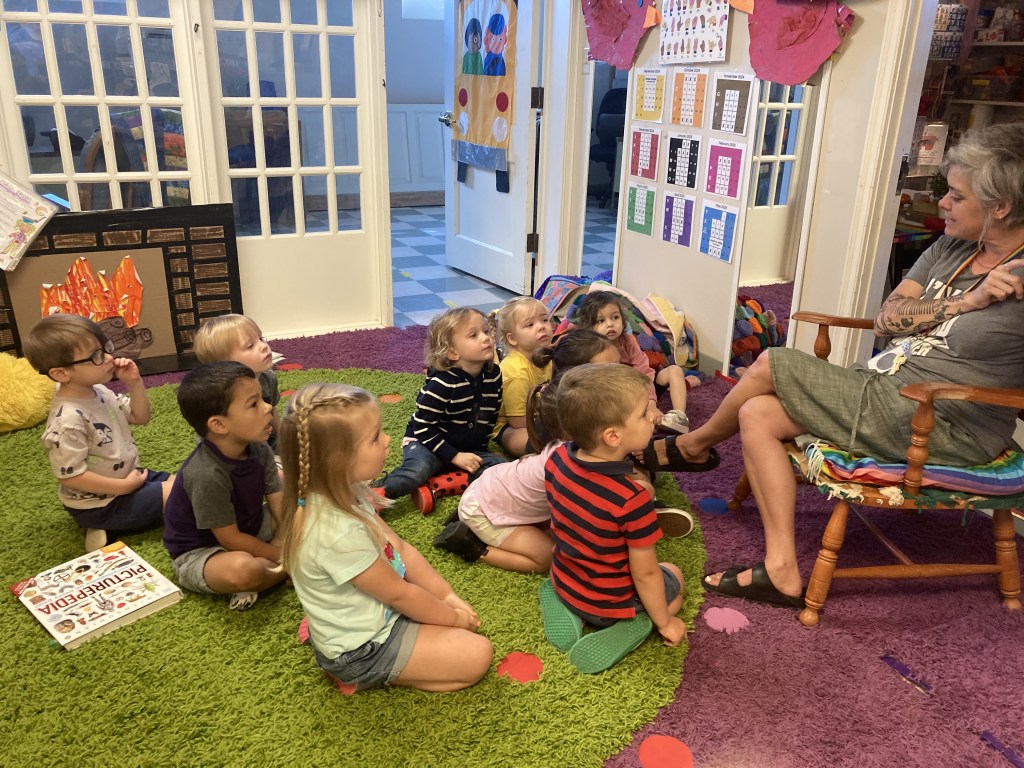
While outside, we also played in the September heat and finished our days on the blanket for our Goodbye Circle (where we talk about the next time we’ll be together and sing “We Wish You Well”).

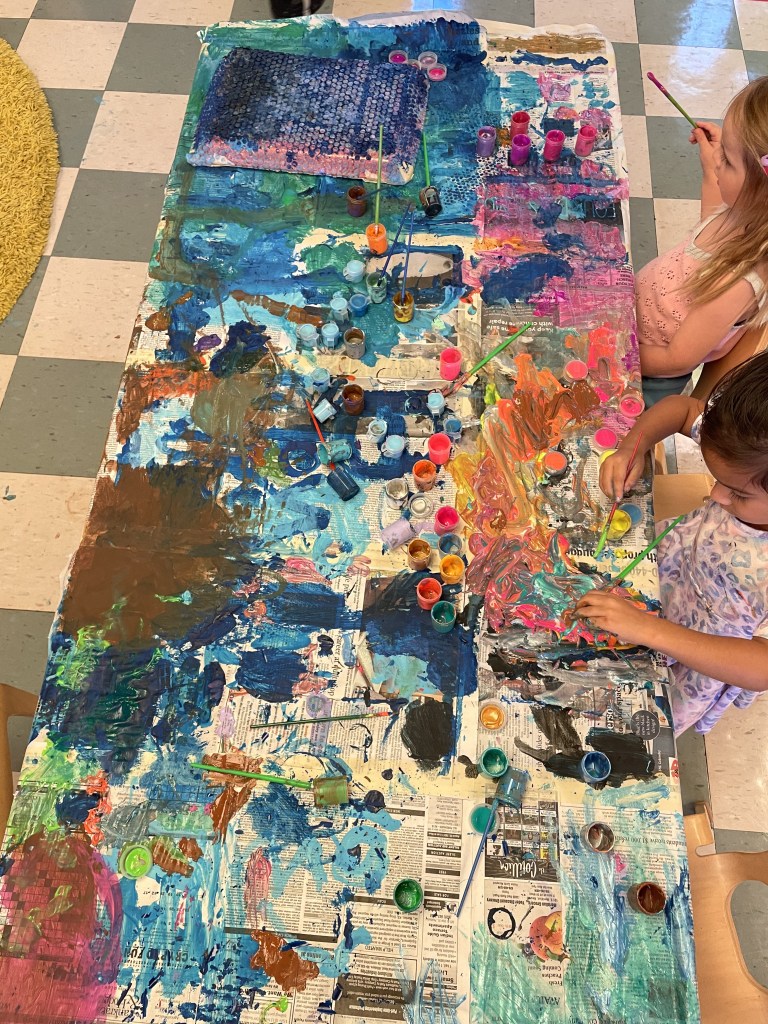
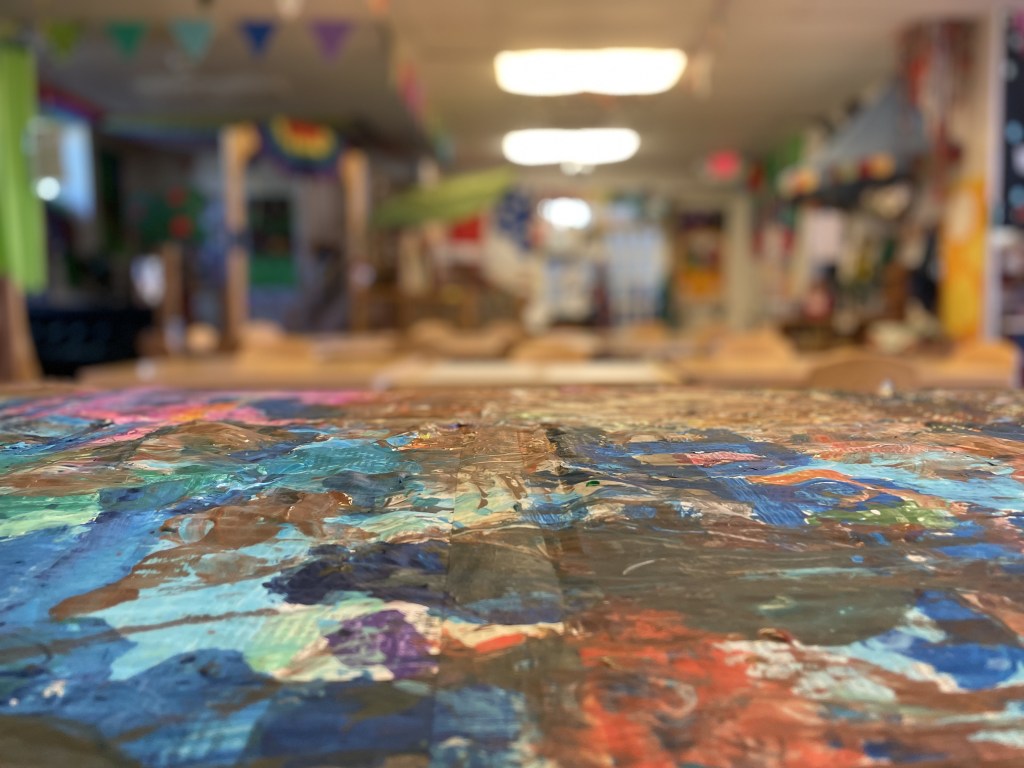
How did we get the beautiful brown paint?

What food did the animals eat?
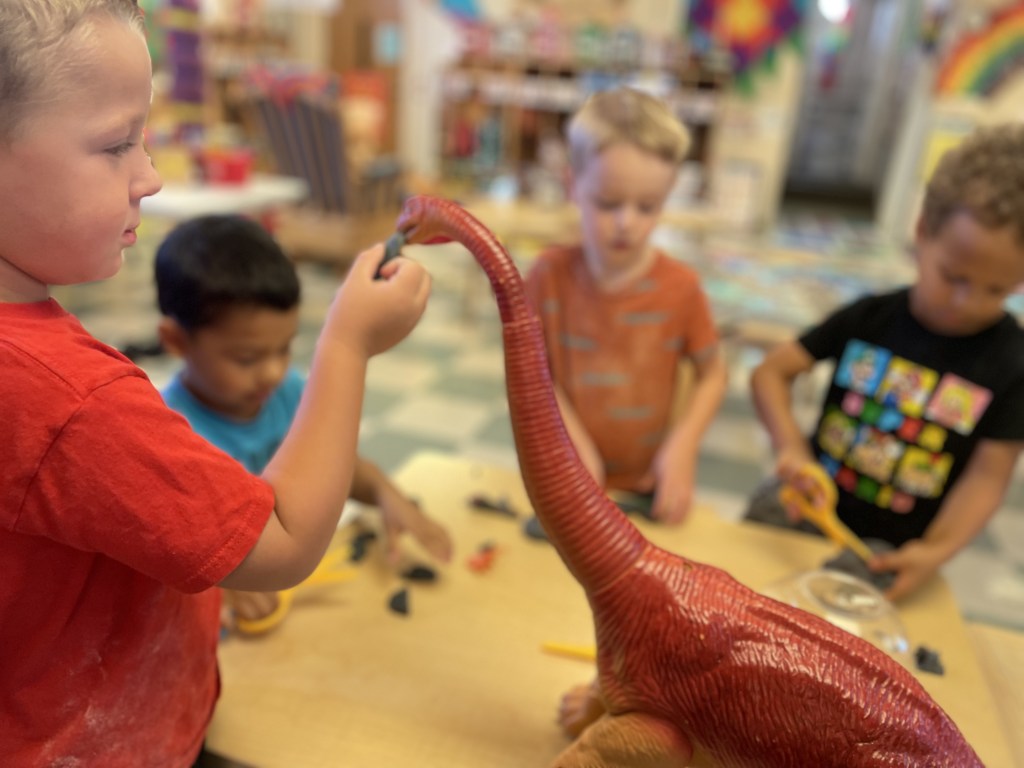
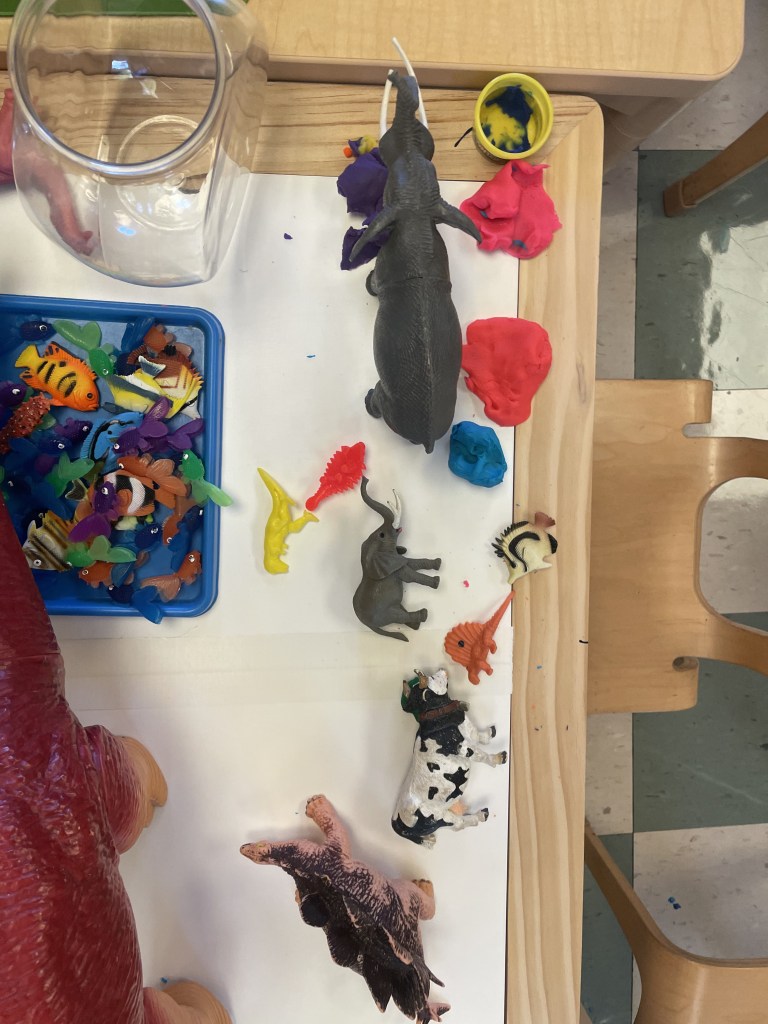
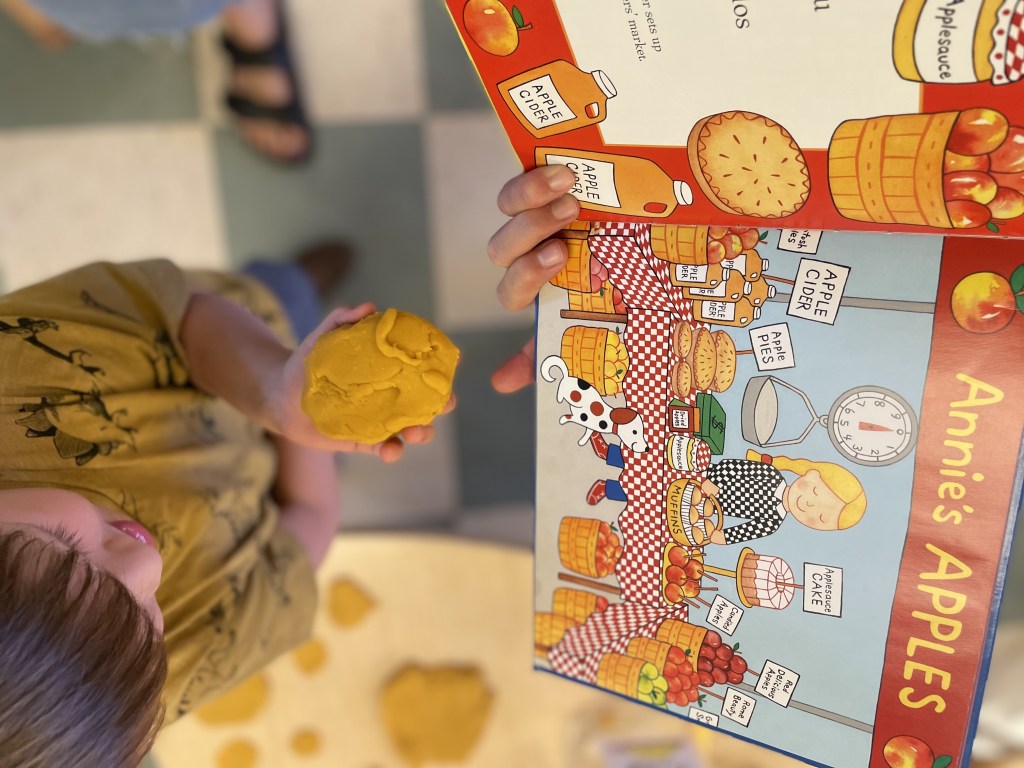
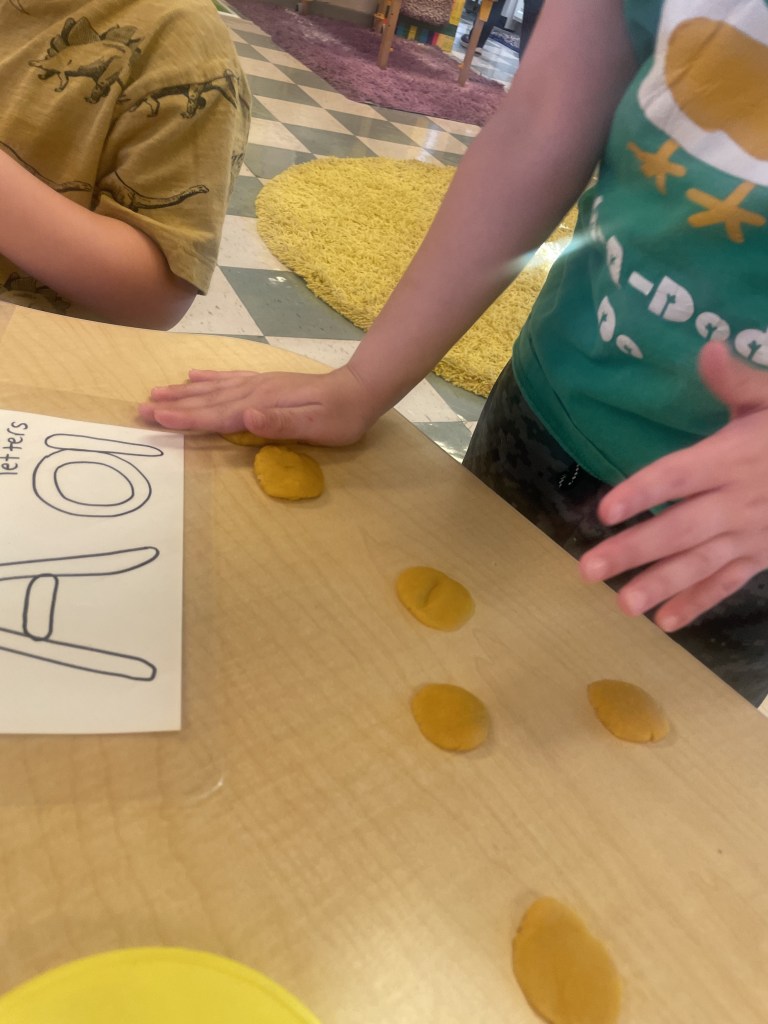
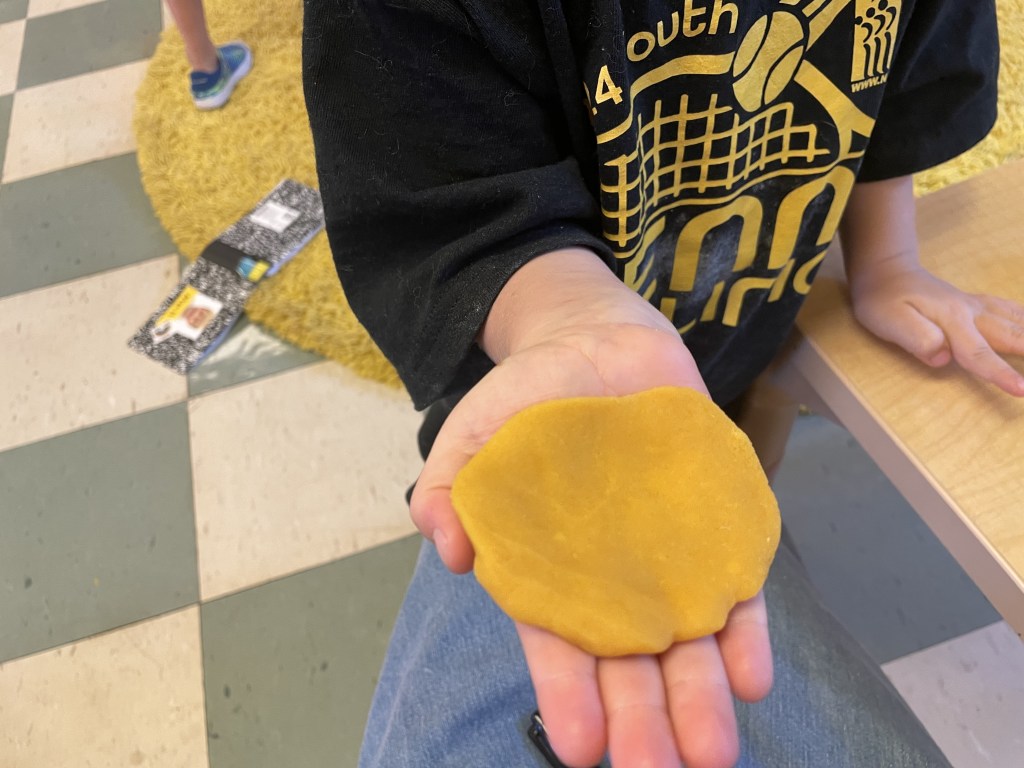
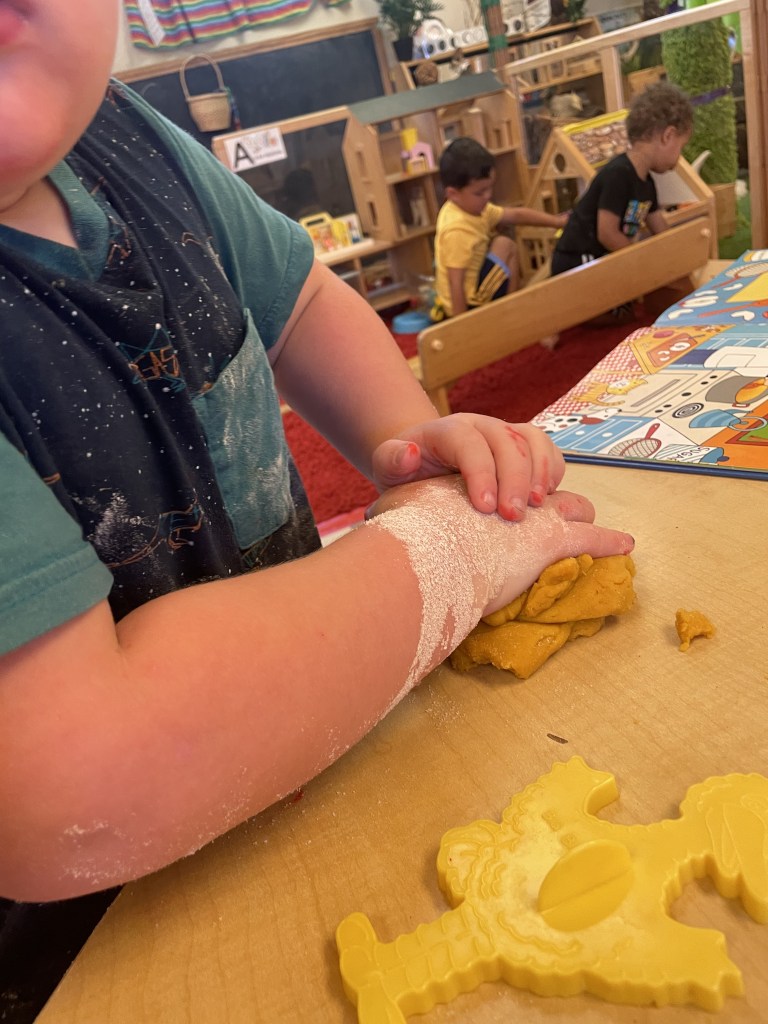
After classifying the animal groups, we brought play dough over to make food for the baby animals. Some of the food was realistic and some was silly. The big dinosaur baby really liked cinnamon rolls. Ms Kristin made him turn his head and say, “Did someone say cinnamon rolls?”

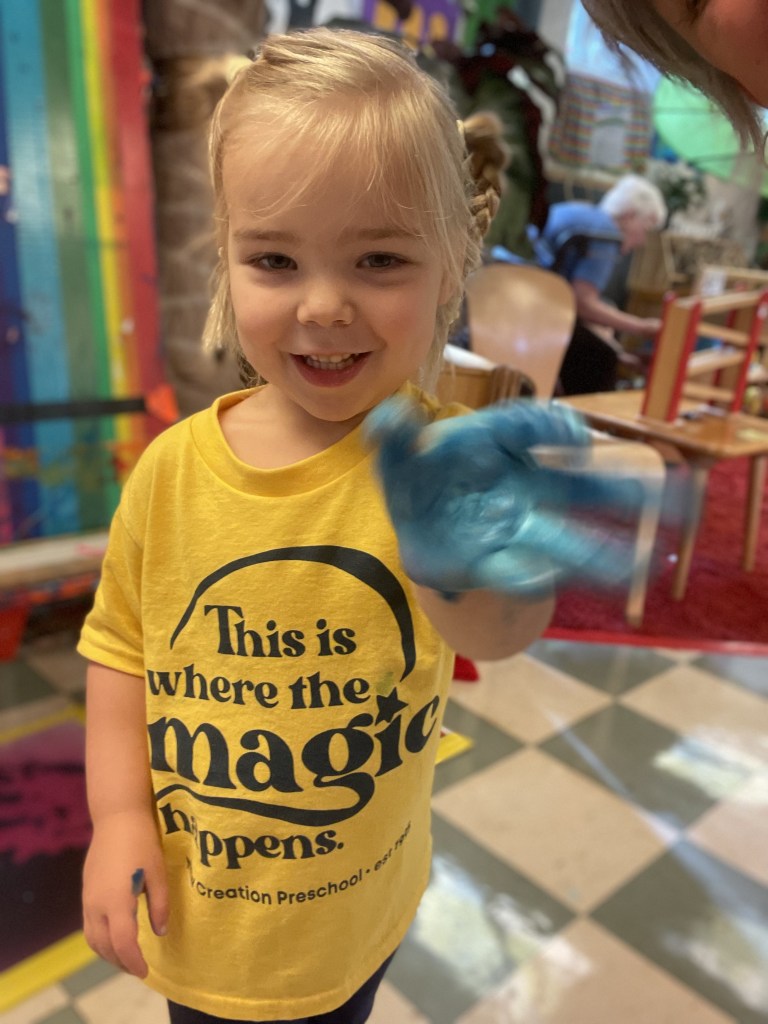
What did you blow through to make bubbles in your cup?

In the morning Ms Kristin brought bunny food (carrots!) which was a nice carry on from our morning of making food for the pretend baby animals. We always offer a “safe food”- so everyone has something they want to eat. Today it was Cheez-Its for the table.

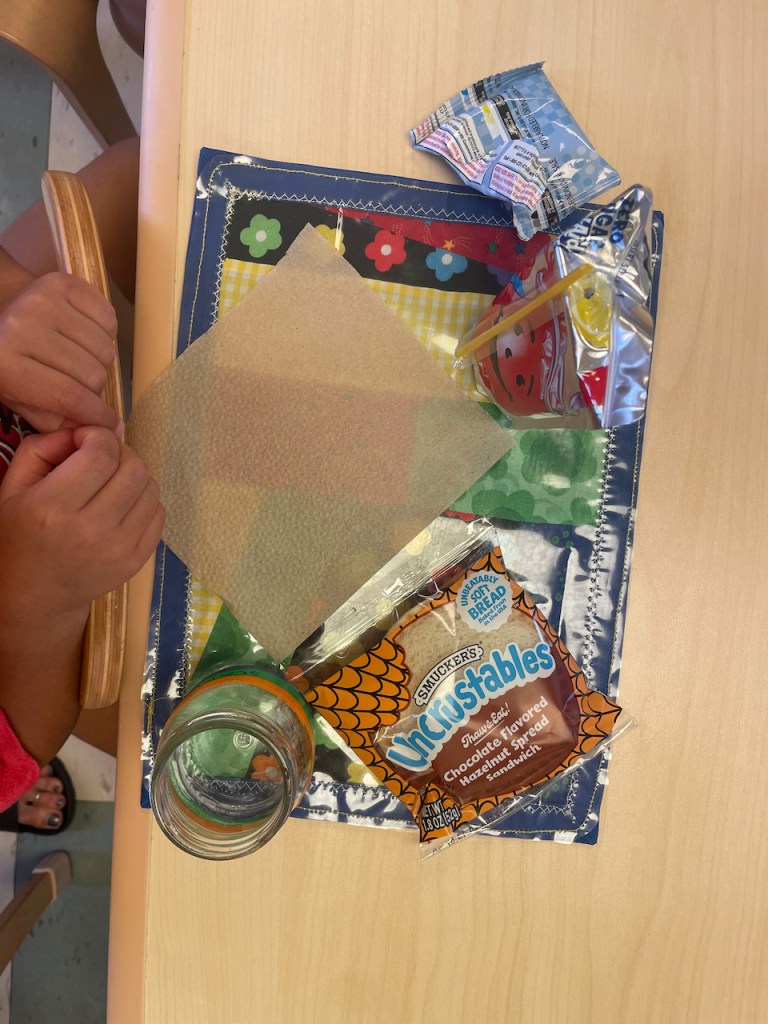
In the afternoon we had blueberry muffins, bananas and bear fruit snacks! What a beautiful treat. Thank you, Heath!


This week we are exploring the longer exhale breath that accompanies blowing bubbles (both bubbles already in the air and the act of using a bubble wand or straw). Longer exhales cause the vagus nerve to send a signal to the brain, activating the parasympathetic nervous system (rest and digest) and easing the sympathetic nervous system (fight, flight, or freeze). Children may be able to witness the effectiveness of this breathing technique while blowing bubbles. Children are also reminded to return to a comfortable and spontaneous breathing pattern (building on last week’s skill of honoring their bodies’ impulses. This coping skill has the added benefit of being one that can be done “anytime anywhere” with imaginary bubbles.

This week’s Coping Skill questions you can ask your child:

How small of a mouth hole can you blow bubble breath through? One trick to extend the exhale is to purse the lips and make as small of an opening as possible for the breath to sneak out of. Remember to invite children to return to a comfortable breathing pattern after a bubble breath.

What color bubble wand did you use?

We have a wide range of rainbow colors to choose from: red, orange, yellow, green, light blue, dark blue, purple and pink!

Fine motor skills – this one is probably the most obvious to think about. Using the skinny wand that usually comes with a bubble container, children can practice pinching and holding the bubble blower as if they were holding a pencil! They can also work with bilateral hand coordination, as one hand is holding the bottle while the other dips the wand in. There is also strength and dexterity required to open and close the bottle, and lots of different ways to pinch, poke, or clap the bubbles!

Gross motor skills – The act of chasing bubbles and trying to pop them can be a great way to get kids to crawl, jump, run, stomp, bend down and reach up super high! This fun play can help strengthen children’s muscles and develop important gross motor skills, and usually the chase of the bubble is it’s own reward!

Sensory processing skills – Bubbles are wet and slimy, they feel interesting on your skin. This might be something some kids LOVE…and other kids might hate. It might be a nice way to practice getting used to a soapy texture if you’re trying to help your child with their willingness to bathe/wash their hands. The physical act of blowing a bubble can also be very effective as a sensory based way to help children organize and focus their bodies.

Hand eye coordination and visual tracking skills – The process of playing with bubbles take lots of practice to connect what the eyes and hands are doing in order to use the wand! With this practice, we can also work on tracking skills, by pointing out the bubbles high and low, to have your child look at them to their left, right, up and down.

Oral motor skills – Blowing bubbles is hard work! To blow a bubble you need to pucker your lips to make a little circle (also called lip rounding), which can help improve oral motor skills! These oral motor skills can help exercise the jaw muscles to prepare the mouth for pronunciation of words. I read a tip that if you see that their lips are making a flat shape instead of a round shape, you can gently squeeze their cheeks to get their lips to make the right shape.


A slingshot, print making in our journals, making food and blowing bubbles: WEDNESDAY B WEEK

Here are some questions to find out about our day:

What did you make a print of for your journal?

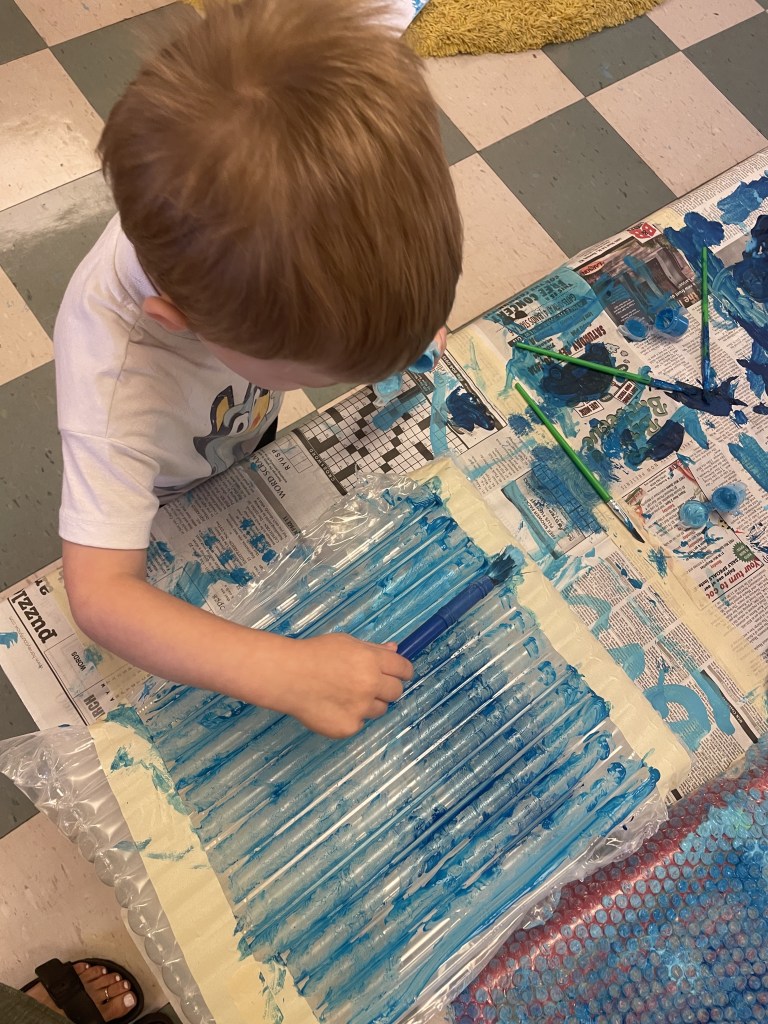
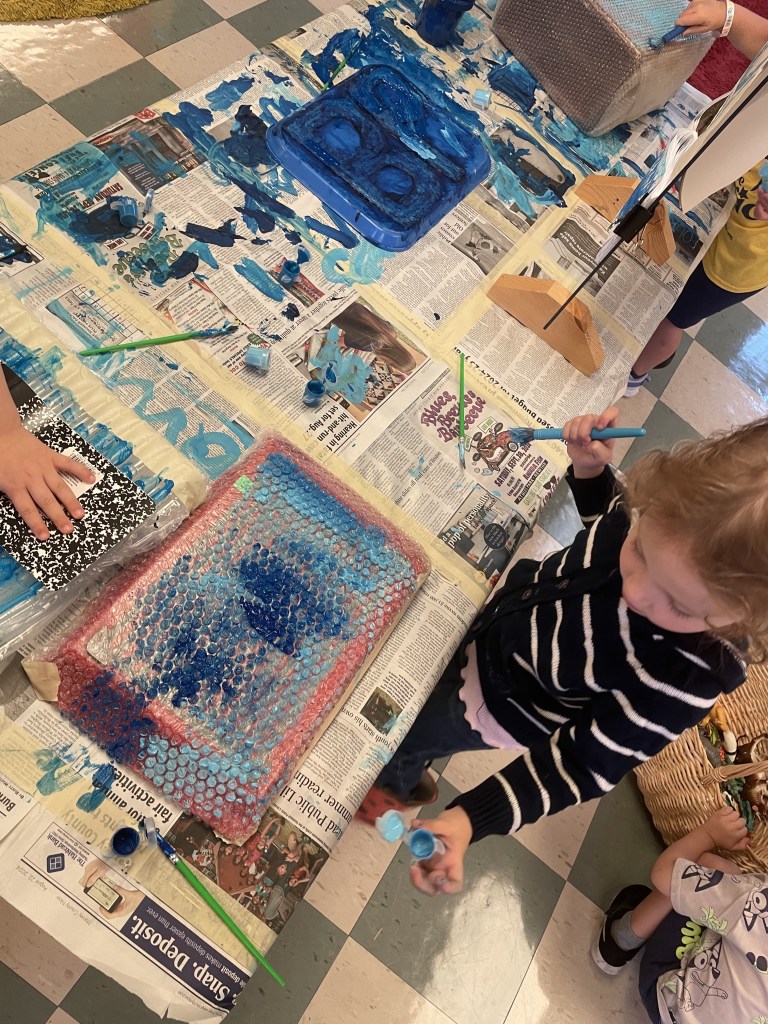
Bubble wrap! We had different bubble wrap available with more shades of blue. We pressed hard on our journals to get a strong print!

Fanny the Fan is still at preschool today and helped get our paintings dry,

How did the baby bubble break?

A rock from a slingshot hit it! Woah, we turned the page quickly to find out what happened to the baby.

Good news: he is safe.

We also had fun looking for the steeple on our church school building…but there was NOT anyone with a slingshot on it.

Who did you make pretend food for?

.The baby animals and their grown ups! We worked on classification and animal habitats while also providing them with play dough food. Thank you to the families who have donated play dough…the wide range of colors came in really handy today!

What did you have at Snack Time today?

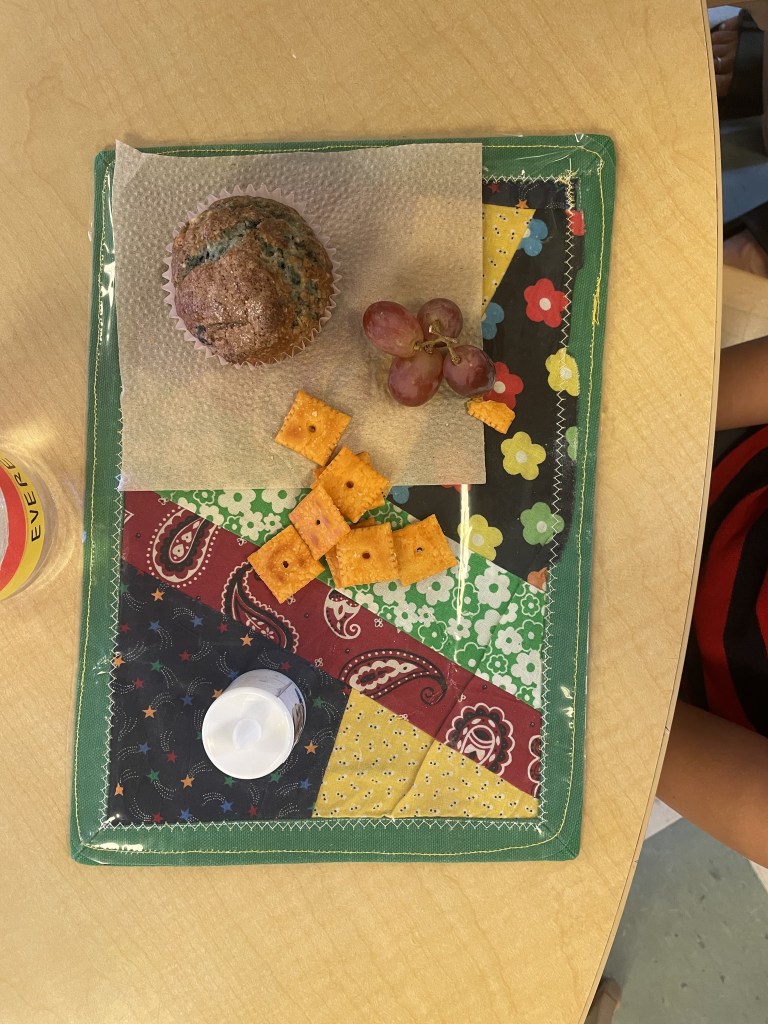
We invite children to help set the table, arrange chairs, cut napkins (we’re working to cut down on waste this year…wait to hear more!). It’s a fun part of our day.

In the morning we had a birthday celebration snack for Everett with blueberry muffins, grapes and cheese crackers. Thank you, Everett!

In the afternoon we had butterflies! The body was cheese, the wings were filled with goldfish, Halloween colored m&ms and grapes. All were individually decorated by Owen. Thank you!


This week we are exploring the longer exhale breath that accompanies blowing bubbles (both bubbles already in the air and the act of using a bubble wand or straw). Longer exhales cause the vagus nerve to send a signal to the brain, activating the parasympathetic nervous system (rest and digest) and easing the sympathetic nervous system (fight, flight, or freeze). Children may be able to witness the effectiveness of this breathing technique while blowing bubbles. Children are also reminded to return to a comfortable and spontaneous breathing pattern (building on last week’s skill of honoring their bodies’ impulses. This coping skill has the added benefit of being one that can be done “anytime anywhere” with imaginary bubbles.

This week’s Coping Skill questions you can ask your child:

How small of a mouth hole can you blow bubble breath through? One trick to extend the exhale is to purse the lips and make as small of an opening as possible for the breath to sneak out of. Remember to invite children to return to a comfortable breathing pattern after a bubble breath.

What color bubble wand did you use?

We have a wide range of rainbow colors to choose from: red, orange, yellow, green, light blue, dark blue, purple and pink!

Fine motor skills – this one is probably the most obvious to think about. Using the skinny wand that usually comes with a bubble container, children can practice pinching and holding the bubble blower as if they were holding a pencil! They can also work with bilateral hand coordination, as one hand is holding the bottle while the other dips the wand in. There is also strength and dexterity required to open and close the bottle, and lots of different ways to pinch, poke, or clap the bubbles!

Gross motor skills – The act of chasing bubbles and trying to pop them can be a great way to get kids to crawl, jump, run, stomp, bend down and reach up super high! This fun play can help strengthen children’s muscles and develop important gross motor skills, and usually the chase of the bubble is it’s own reward!

Sensory processing skills – Bubbles are wet and slimy, they feel interesting on your skin. This might be something some kids LOVE…and other kids might hate. It might be a nice way to practice getting used to a soapy texture if you’re trying to help your child with their willingness to bathe/wash their hands. The physical act of blowing a bubble can also be very effective as a sensory based way to help children organize and focus their bodies.

Hand eye coordination and visual tracking skills – The process of playing with bubbles take lots of practice to connect what the eyes and hands are doing in order to use the wand! With this practice, we can also work on tracking skills, by pointing out the bubbles high and low, to have your child look at them to their left, right, up and down.

Oral motor skills – Blowing bubbles is hard work! To blow a bubble you need to pucker your lips to make a little circle (also called lip rounding), which can help improve oral motor skills! These oral motor skills can help exercise the jaw muscles to prepare the mouth for pronunciation of words. I read a tip that if you see that their lips are making a flat shape instead of a round shape, you can gently squeeze their cheeks to get their lips to make the right shape.


Tongue twisting project, a baby stuck in a bubble, finding babies and blowing bubbles: TUESDAY B WEEK

Here are some questions to find out about our day:

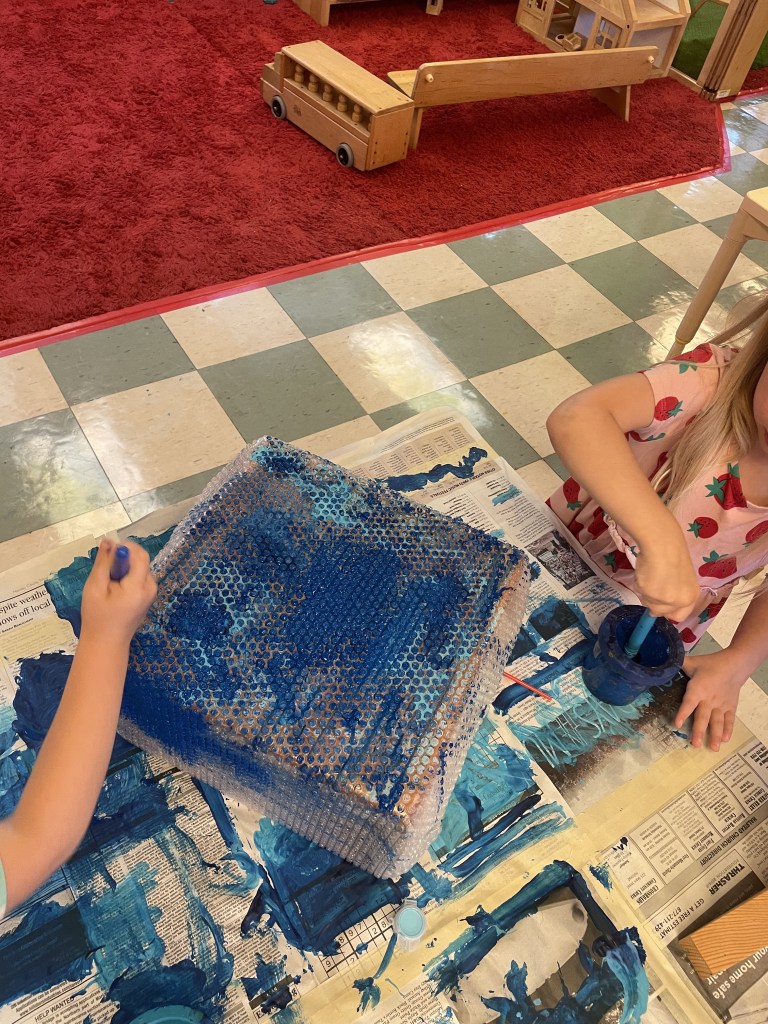
What color paint did you use to paint the bubble wrap?

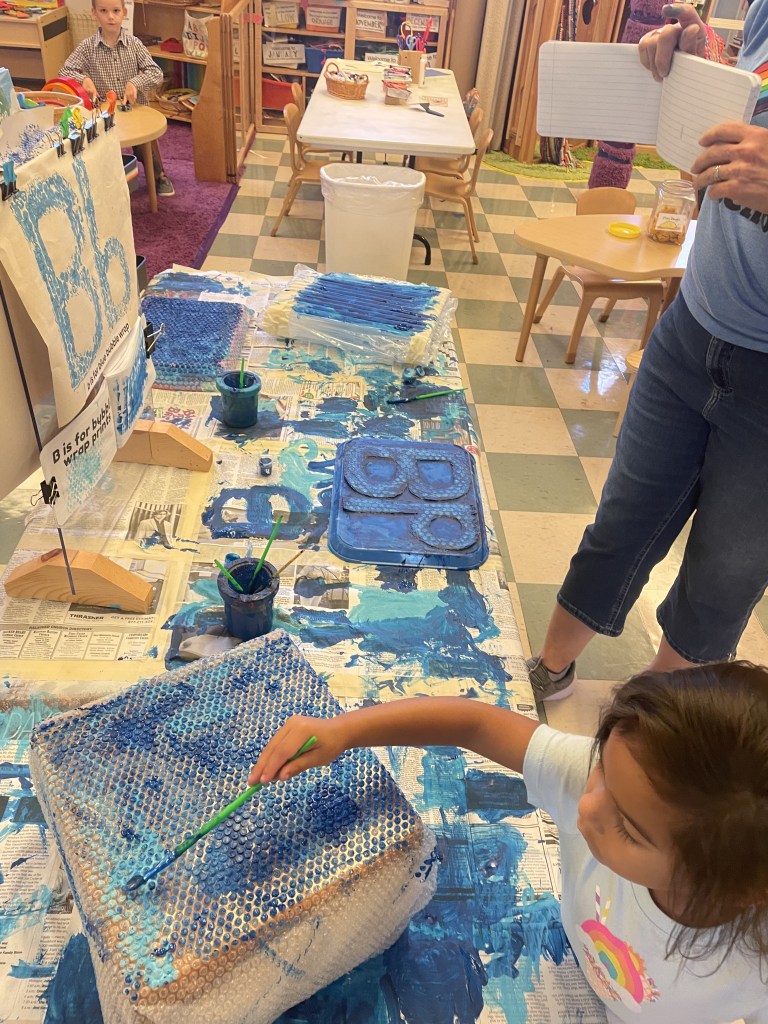
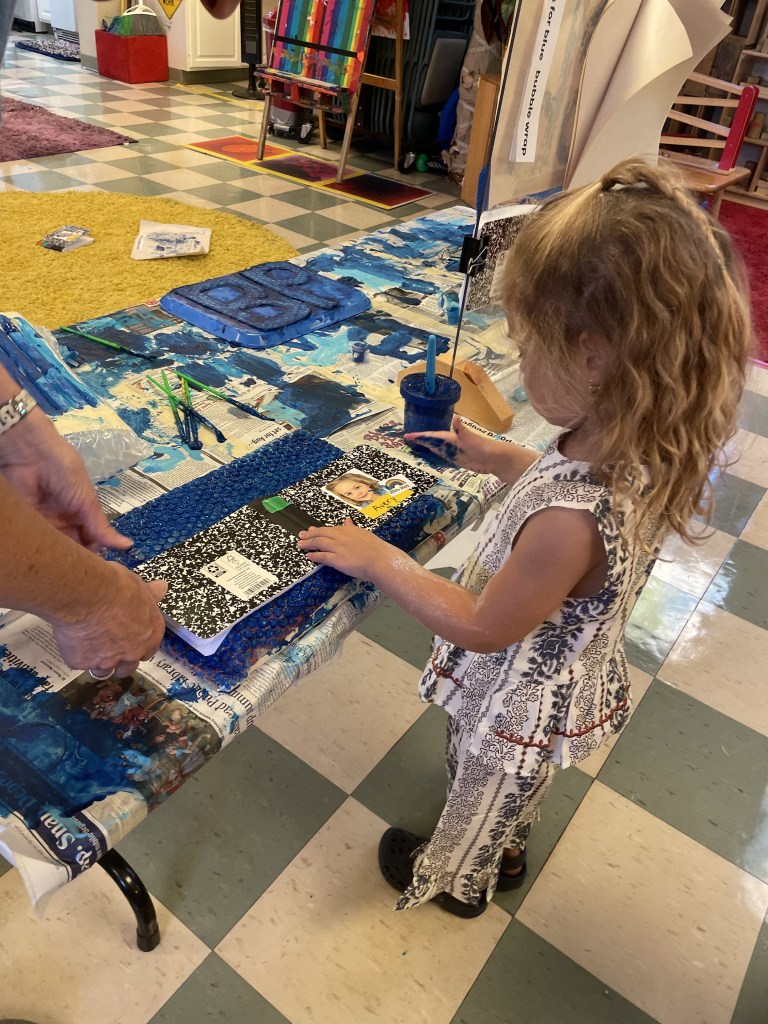
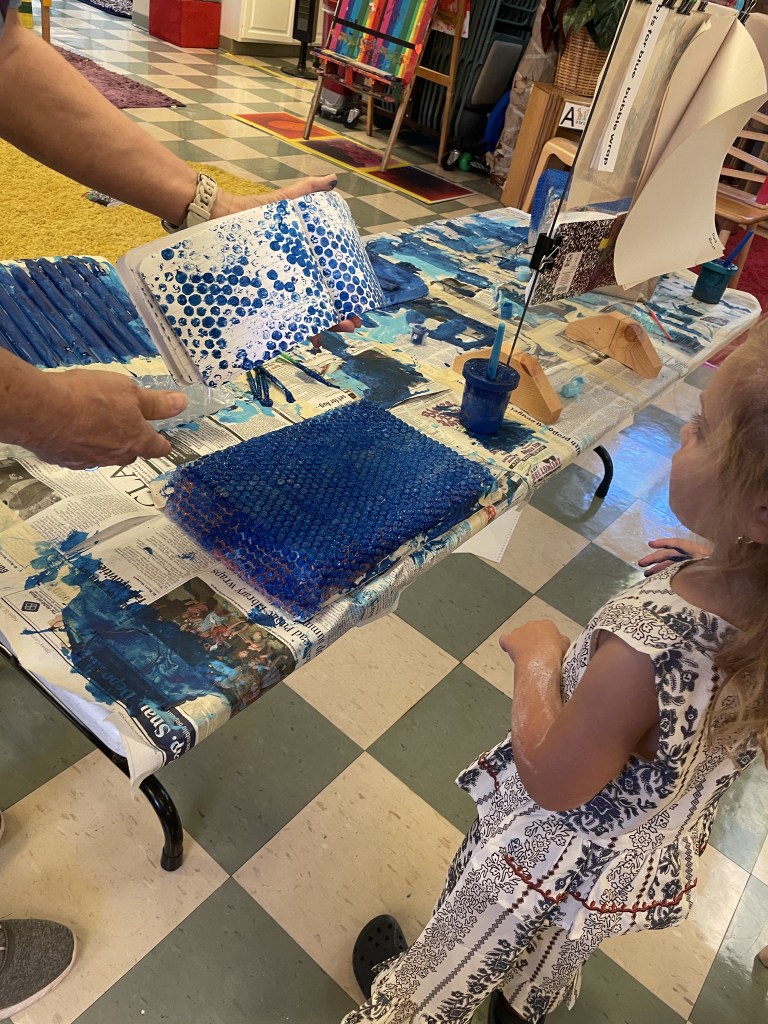
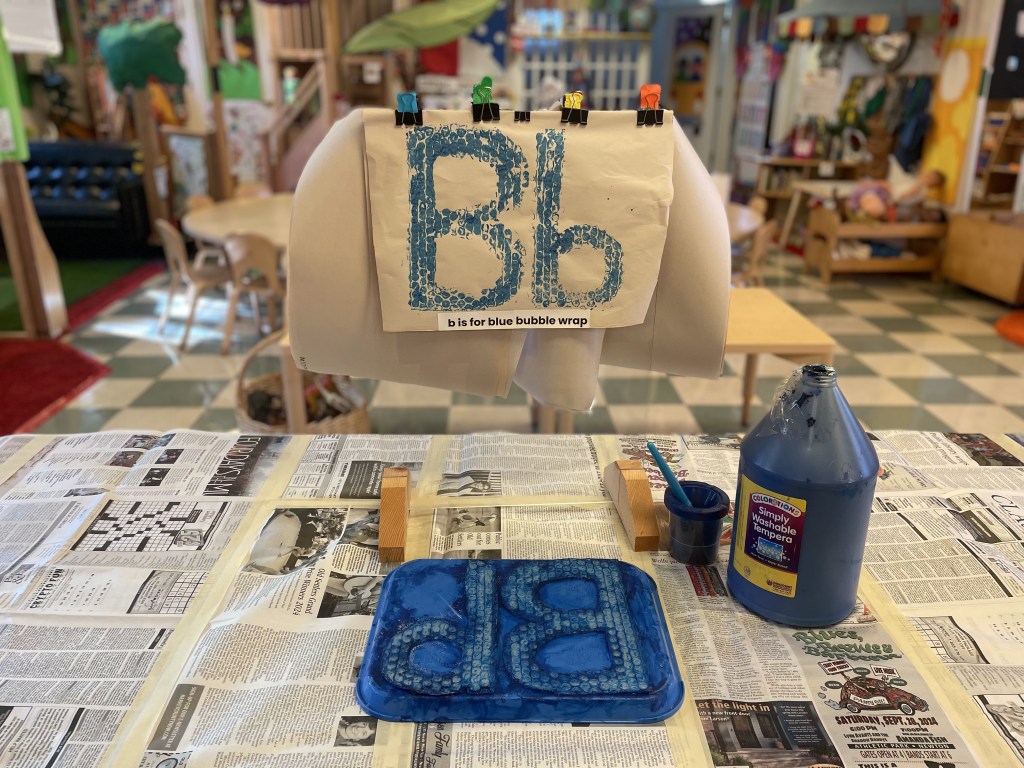
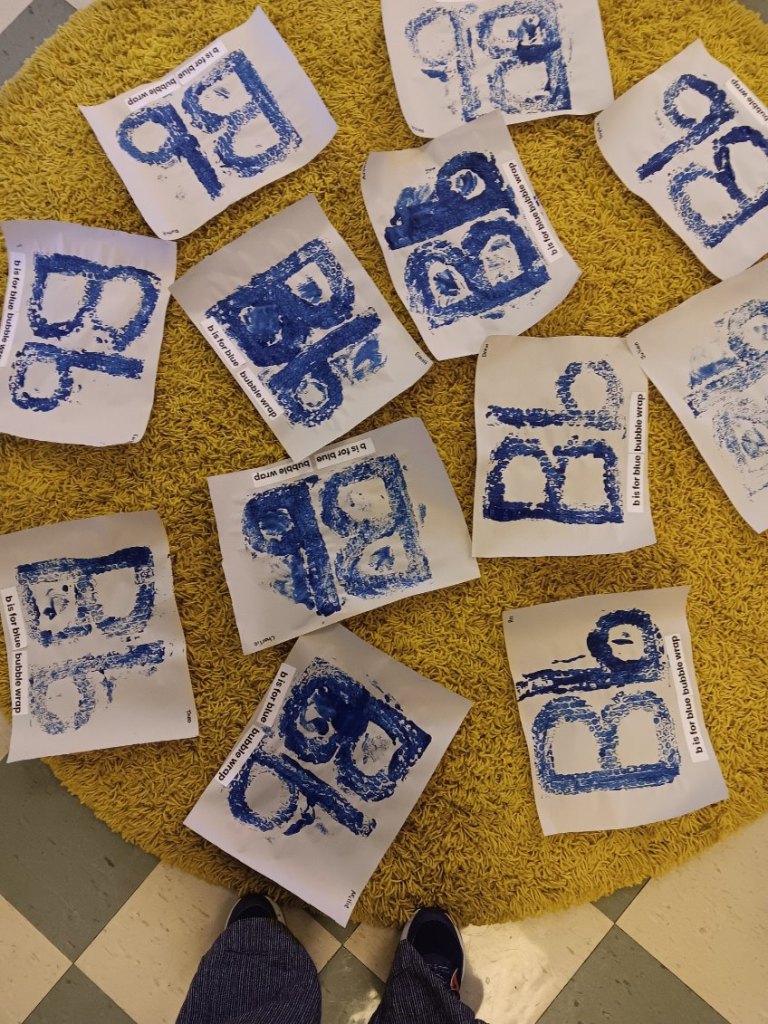
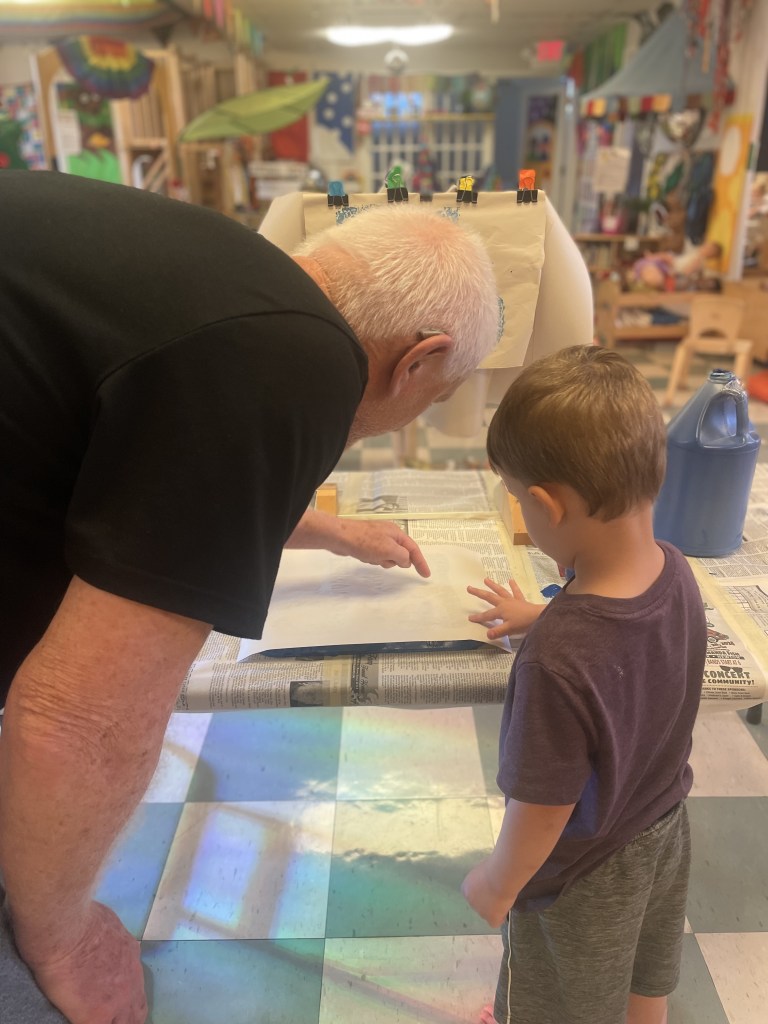
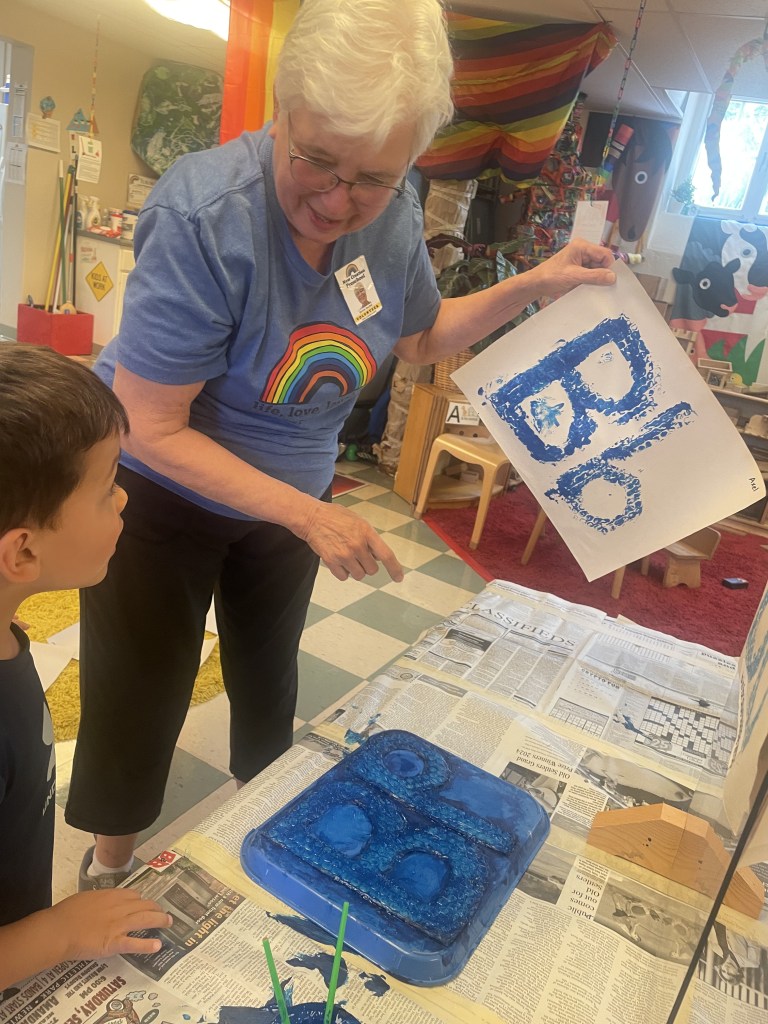
Blue (there was light blue, dark blue and darker blue)! Our Alphabet Art Project is basically a tongue twister: Blue Bubble wrap B prints. Children painted on top of the bubble wrap Bb shapes and then made prints by gently pressing and rubbing paper on top of it.

I’m so grateful for our volunteers! Today Ms Brenda and I were joined by Grandpa Papa Norm, Grandma Vicki and my mom, Grandma Bonnie.

Fanny the Fan joined our preschool today and helped get our paintings dry,

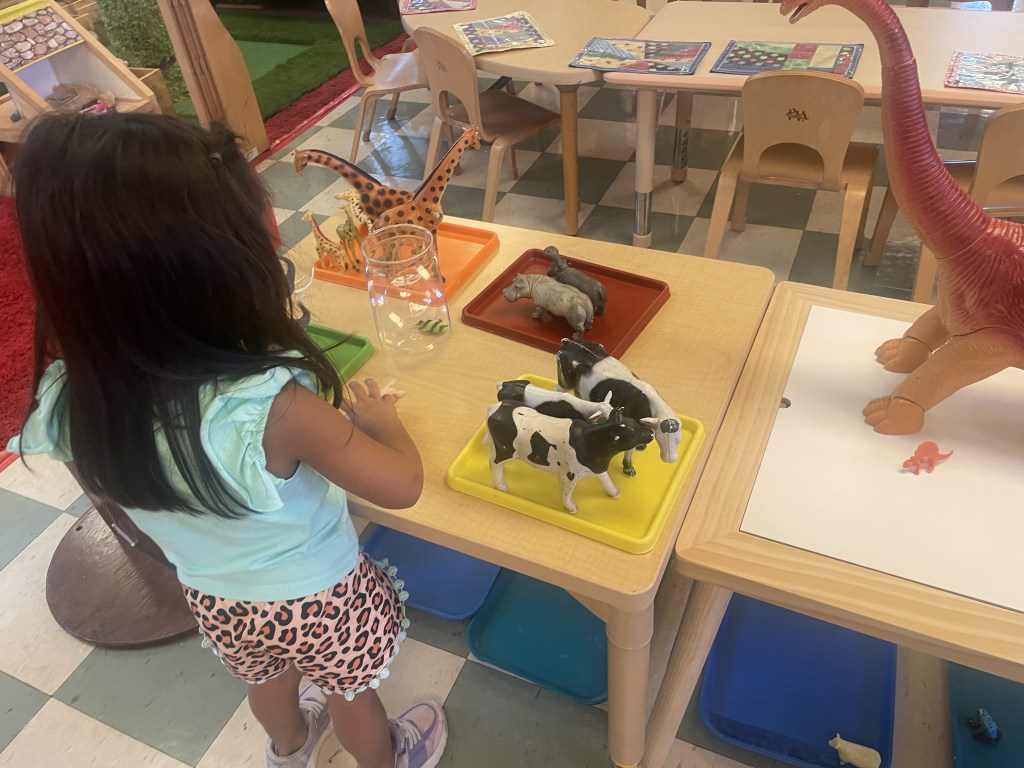
Why were there animals on the tables?

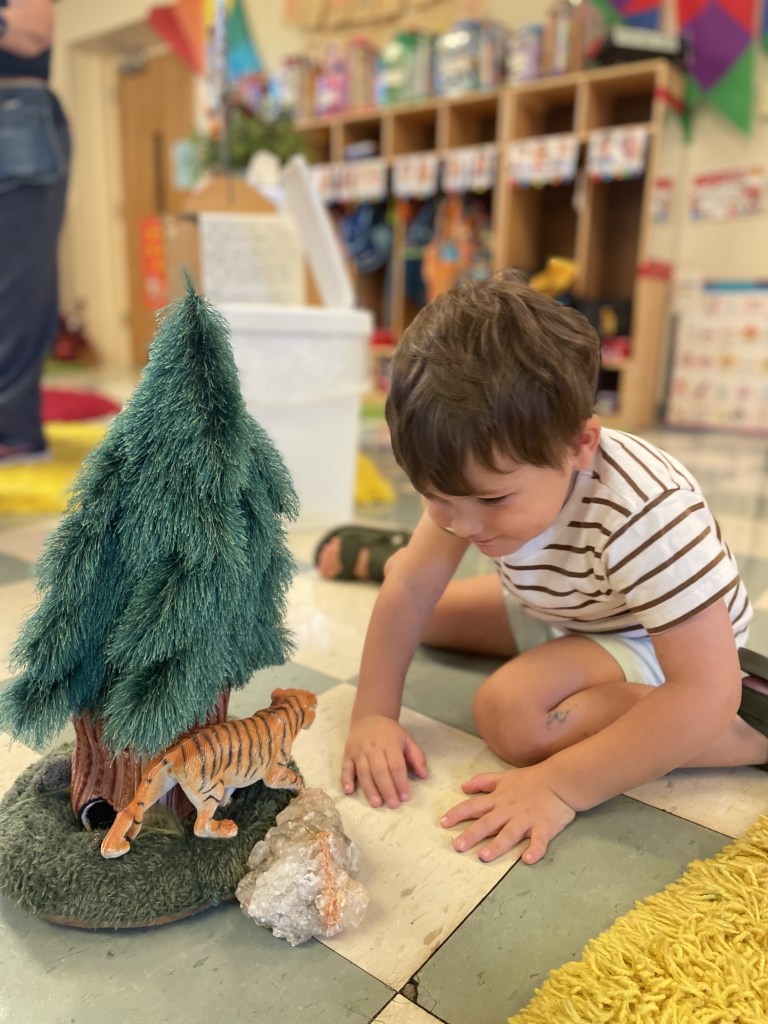
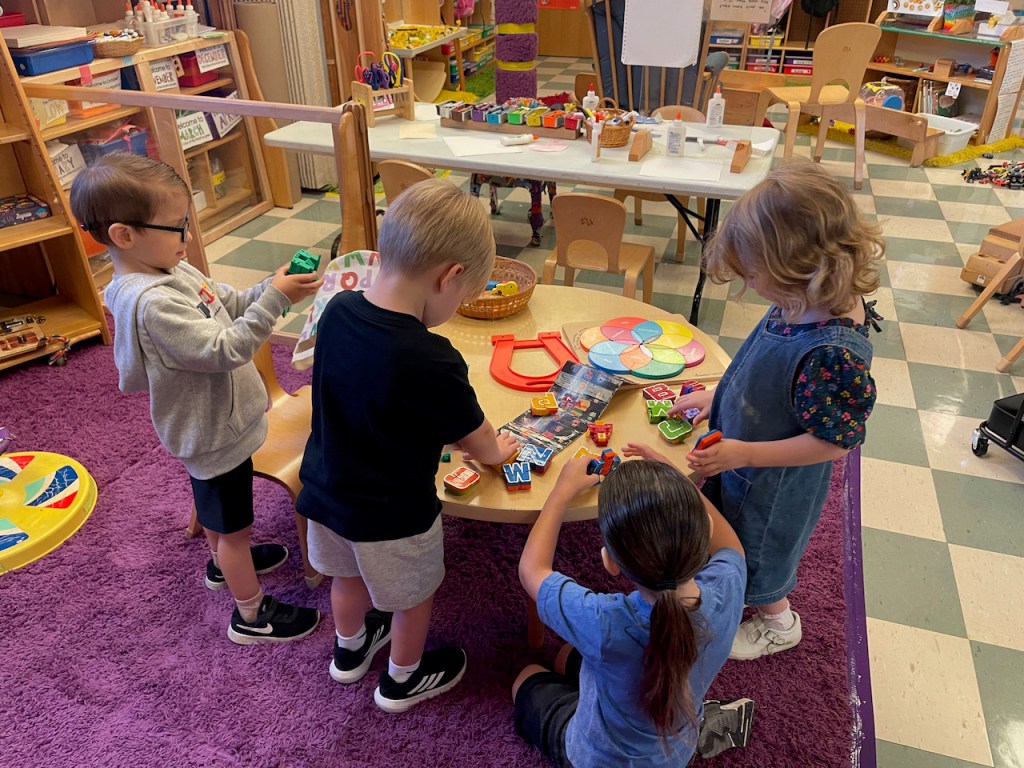
.To help the baby animals find their grown ups! Technically the baby animals were often just smaller versions of adult animals, but we do have some actual baby animals too! Children worked on classification skills in this natural play environment.

What happened to the baby in the book?

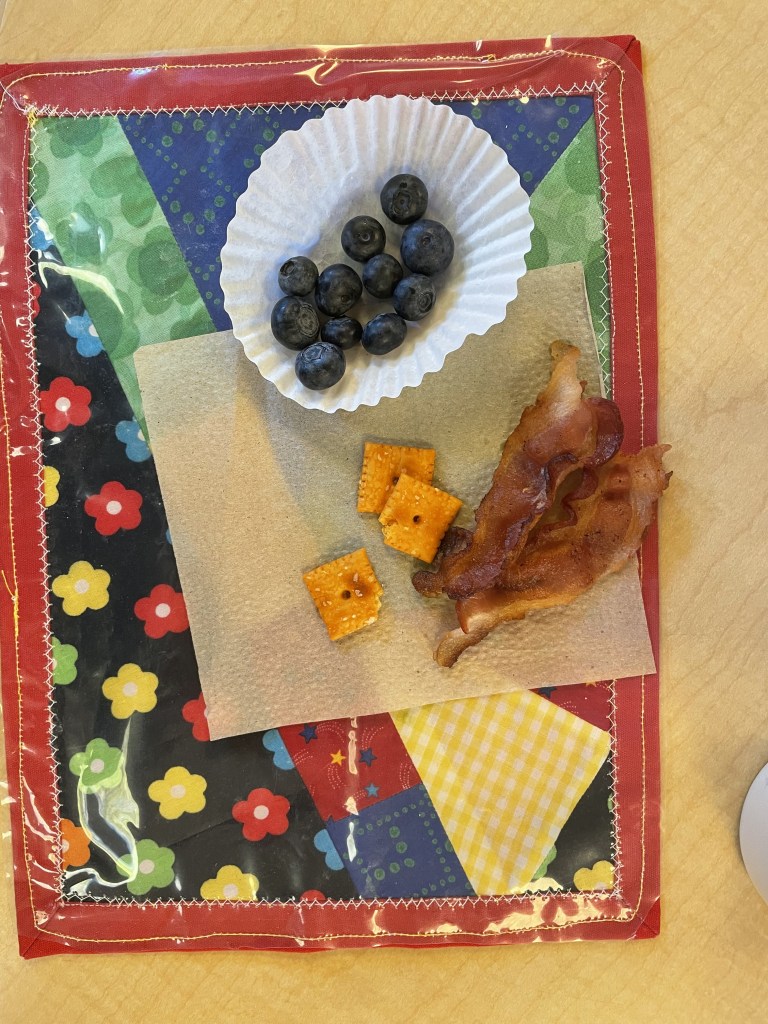
What did you have at Snack Time today?

In the morning we had Bacon and Blueberries from Ruthie and Bright orange cheese crackers from Sophie! It was very exciting to find big blueberries and blueberries with the stems still on. Thank you, friends!

In the afternoon we had Black forest Berry Burst fruit snacks, Baby animal crackers and Baby Goldfish (they were just regular crackers but we called them babies to stay on theme….hahahaha). Thank you, Zander!


This week we are exploring the longer exhale breath that accompanies blowing bubbles (both bubbles already in the air and the act of using a bubble wand or straw). Longer exhales cause the vagus nerve to send a signal to the brain, activating the parasympathetic nervous system (rest and digest) and easing the sympathetic nervous system (fight, flight, or freeze). Children may be able to witness the effectiveness of this breathing technique while blowing bubbles. Children are also reminded to return to a comfortable and spontaneous breathing pattern (building on last week’s skill of honoring their bodies’ impulses. This coping skill has the added benefit of being one that can be done “anytime anywhere” with imaginary bubbles.

This week’s Coping Skill questions you can ask your child:

How small of a mouth hole can you blow bubble breath through? One trick to extend the exhale is to purse the lips and make as small of an opening as possible for the breath to sneak out of. Remember to invite children to return to a comfortable breathing pattern after a bubble breath.

What color bubble wand did you use?

We have a wide range of rainbow colors to choose from: red, orange, yellow, green, light blue, dark blue, purple and pink!

Fine motor skills – this one is probably the most obvious to think about. Using the skinny wand that usually comes with a bubble container, children can practice pinching and holding the bubble blower as if they were holding a pencil! They can also work with bilateral hand coordination, as one hand is holding the bottle while the other dips the wand in. There is also strength and dexterity required to open and close the bottle, and lots of different ways to pinch, poke, or clap the bubbles!

Gross motor skills – The act of chasing bubbles and trying to pop them can be a great way to get kids to crawl, jump, run, stomp, bend down and reach up super high! This fun play can help strengthen children’s muscles and develop important gross motor skills, and usually the chase of the bubble is it’s own reward!

Sensory processing skills – Bubbles are wet and slimy, they feel interesting on your skin. This might be something some kids LOVE…and other kids might hate. It might be a nice way to practice getting used to a soapy texture if you’re trying to help your child with their willingness to bathe/wash their hands. The physical act of blowing a bubble can also be very effective as a sensory based way to help children organize and focus their bodies.

Hand eye coordination and visual tracking skills – The process of playing with bubbles take lots of practice to connect what the eyes and hands are doing in order to use the wand! With this practice, we can also work on tracking skills, by pointing out the bubbles high and low, to have your child look at them to their left, right, up and down.

Oral motor skills – Blowing bubbles is hard work! To blow a bubble you need to pucker your lips to make a little circle (also called lip rounding), which can help improve oral motor skills! These oral motor skills can help exercise the jaw muscles to prepare the mouth for pronunciation of words. I read a tip that if you see that their lips are making a flat shape instead of a round shape, you can gently squeeze their cheeks to get their lips to make the right shape.

Making trees into apple trees, smashing apples, drinking like a tree and honoring our impulses : THURSDAY A WEEK

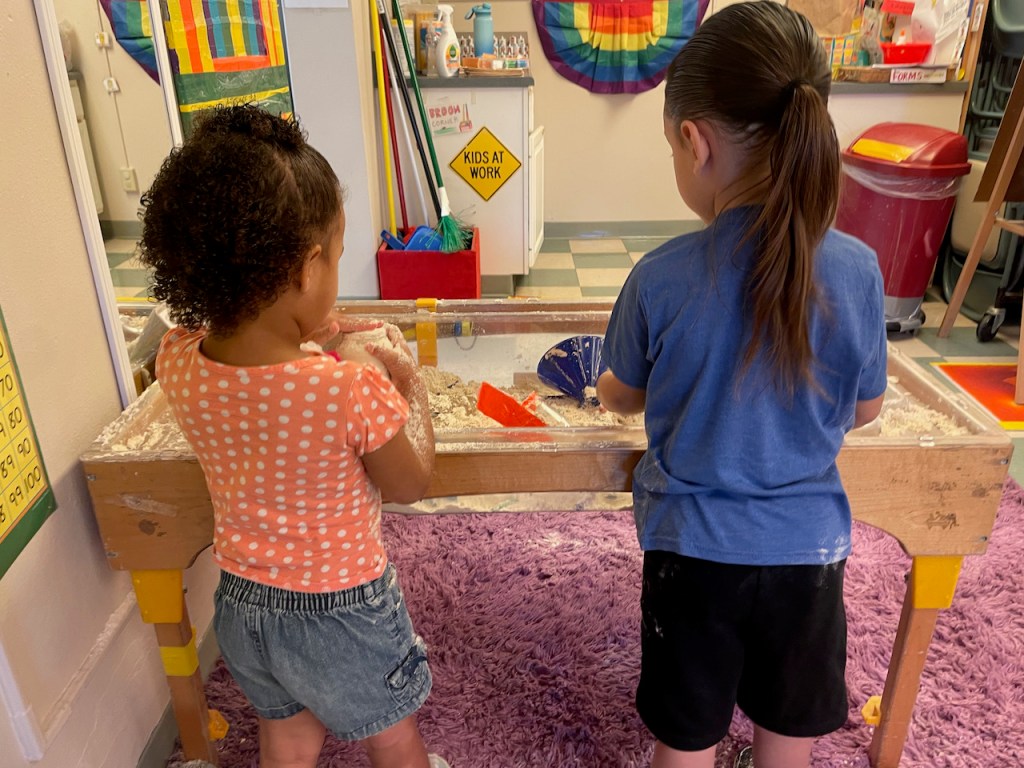
On this last day of A Week, we welcomed another 23 children: 12 in the morning and 11 in the afternoon. We continued to act on what it means to “honor our impulses” (see the segment below) and make connections between apples, eating, drinking, going to the bathroom, etc. We looked more closely at different products made from apples and finished up Journal Time, brought a wooden apple into the Tub Table for the pretend worms to eat, played hard inside and outside. We finished both classes with our Goodbye Circle where I tell them the best things about my day (spoiler alert: it is them)….their faces lighting up when I say their names is ridiculously precious.


Here are 3 questions to learn more about our day:

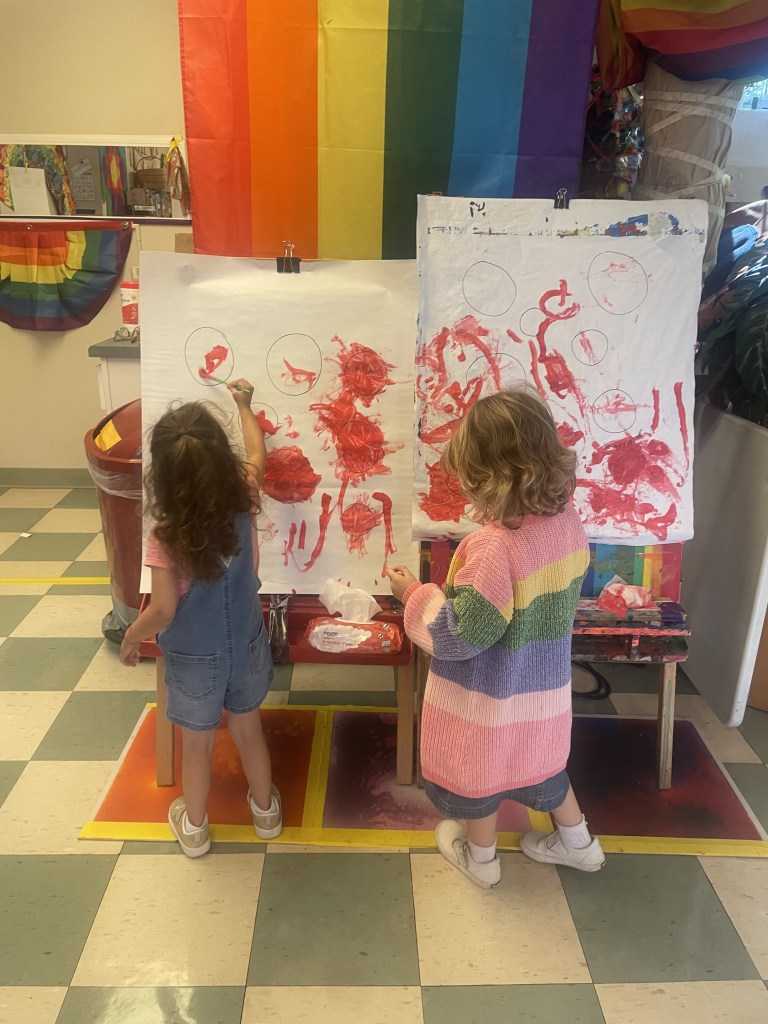
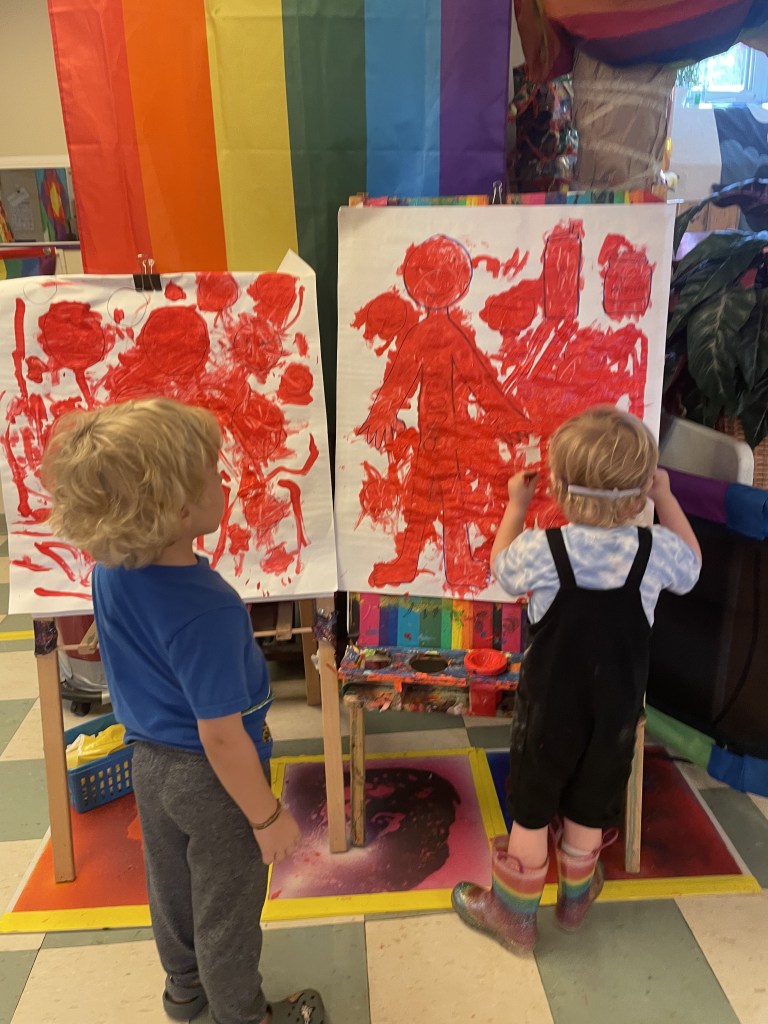
What color paint is at the easel this week?

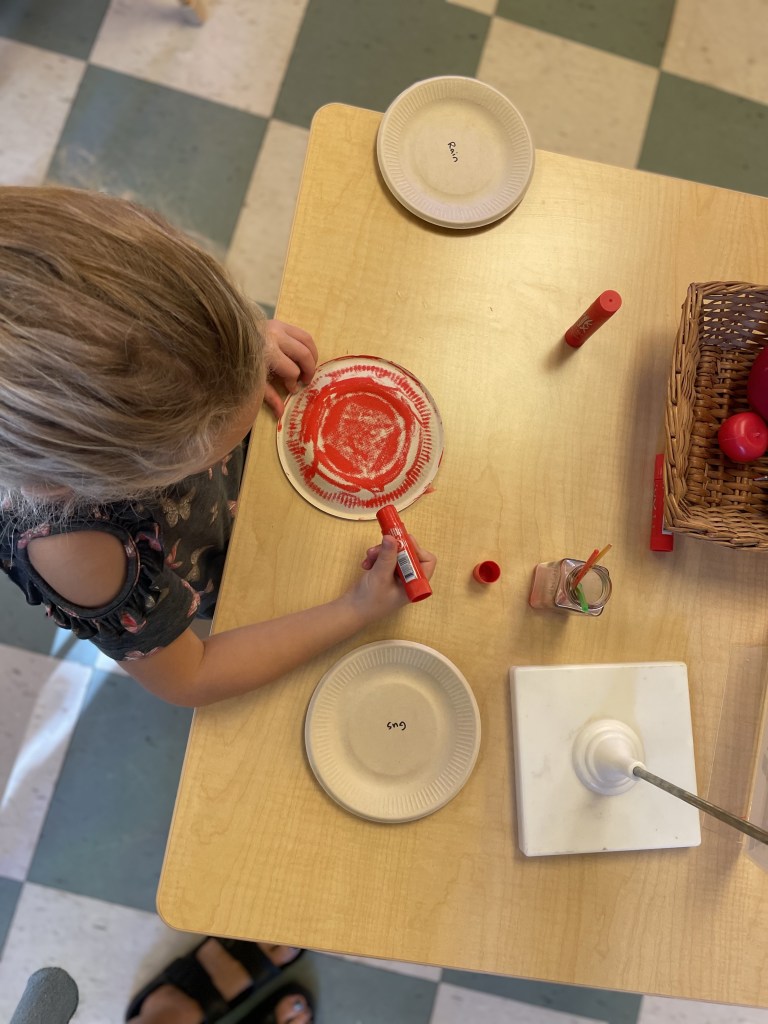
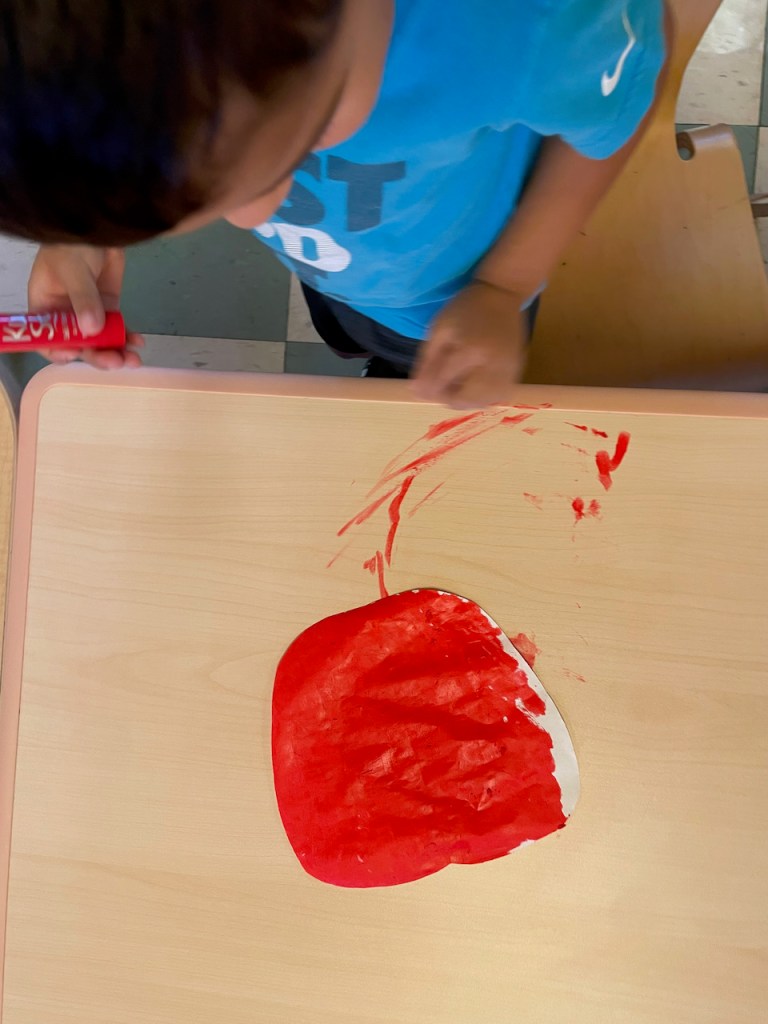
Red! We are using the red paper to make apples for all the pretend trees in our classroom. We confirmed in our book* that some apples are red (and some are yellow, green and many are a mixture of colors). We used real sticks from the playground for stems too.

What did you drink at snack time?

Water! This is the same thing that apple trees drink (either from a hose or bucket when the tree is small and from rain when the tree is bigger and established.)

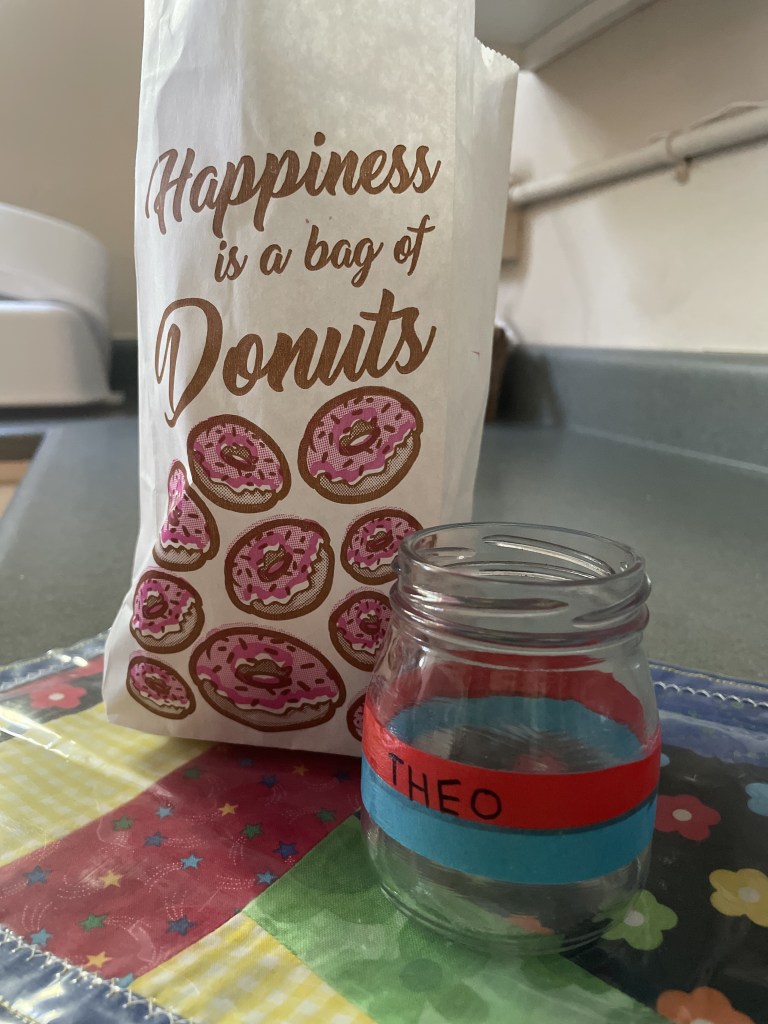
In the morning we had Theo’s birthday celebration snack of donut holes aka donut balls and tried to taste the apple juice in the fruit snacks.

In the afternoon we had cookies, oranges and applesauce from Annie (not the apple farmer, the preschooler).

Thank you, snack friends!

Did you smash any play dough balls?

BIG SWING BONUS:

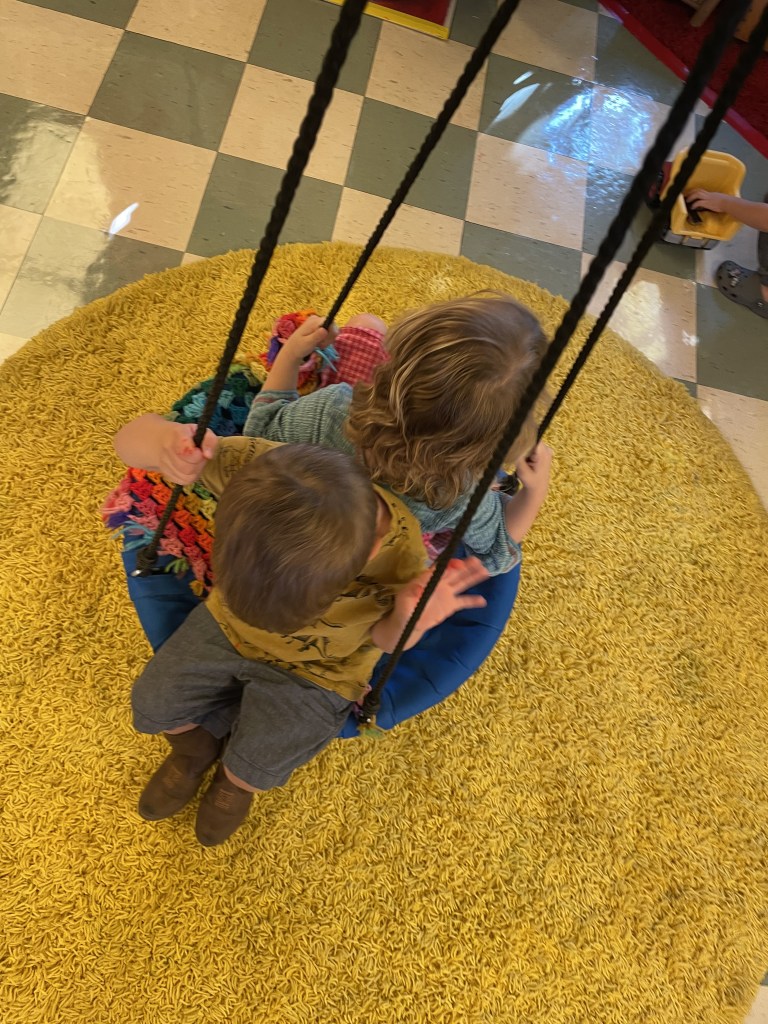
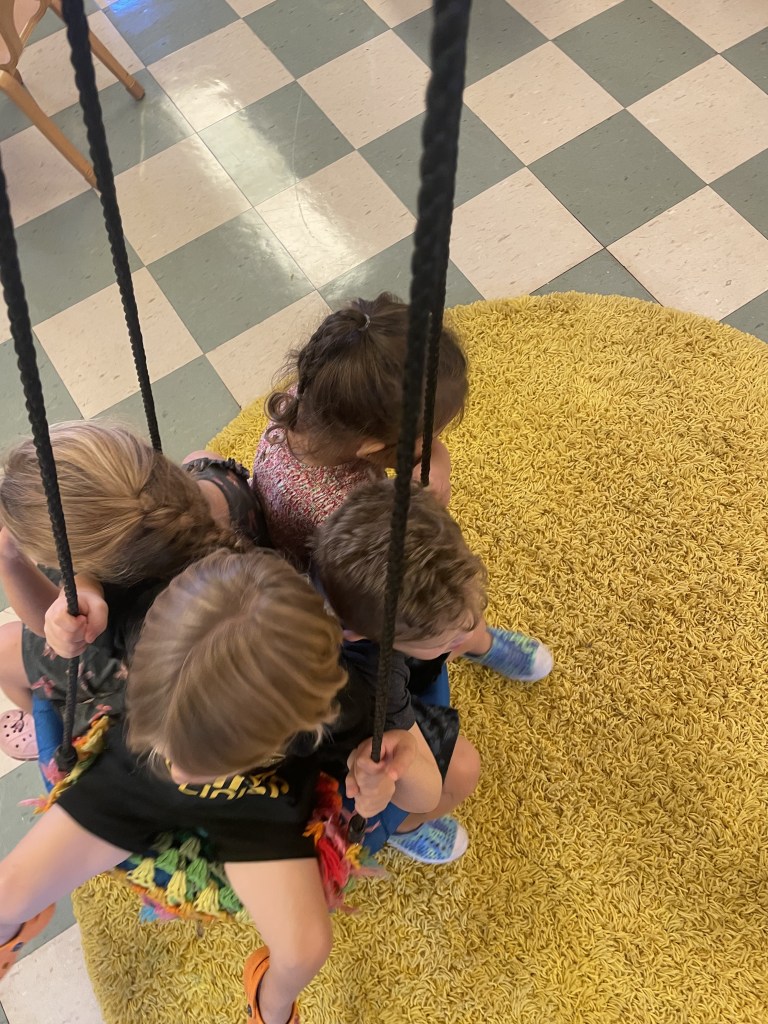
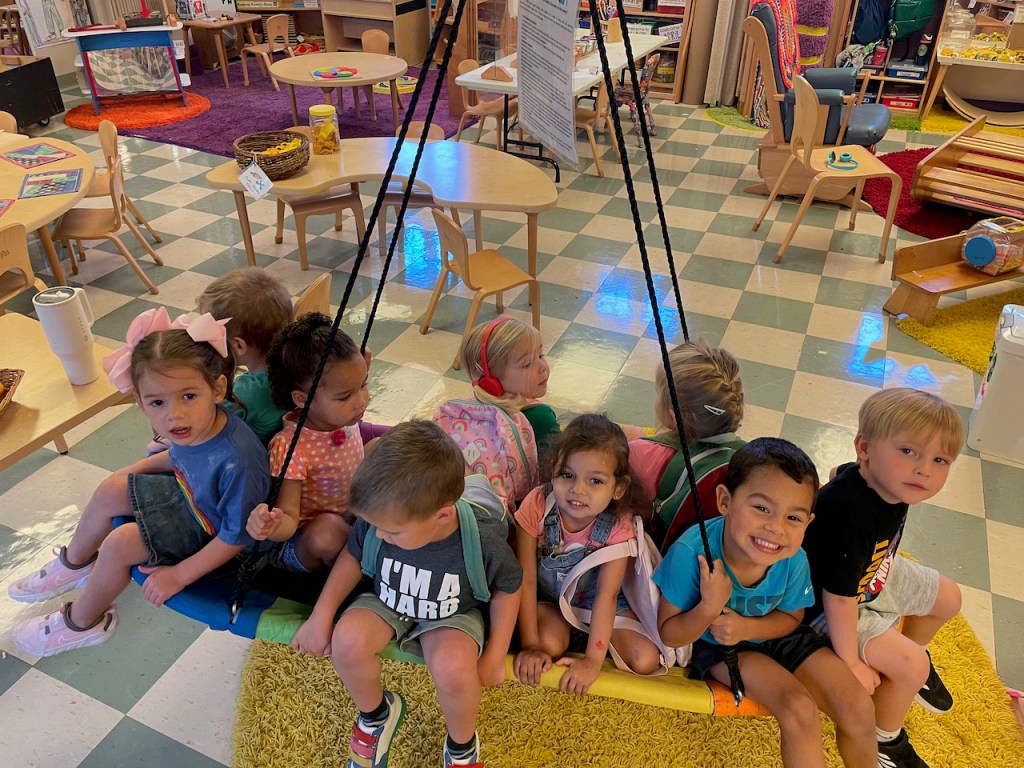
The entire afternoon class was on the swing for quite a while.
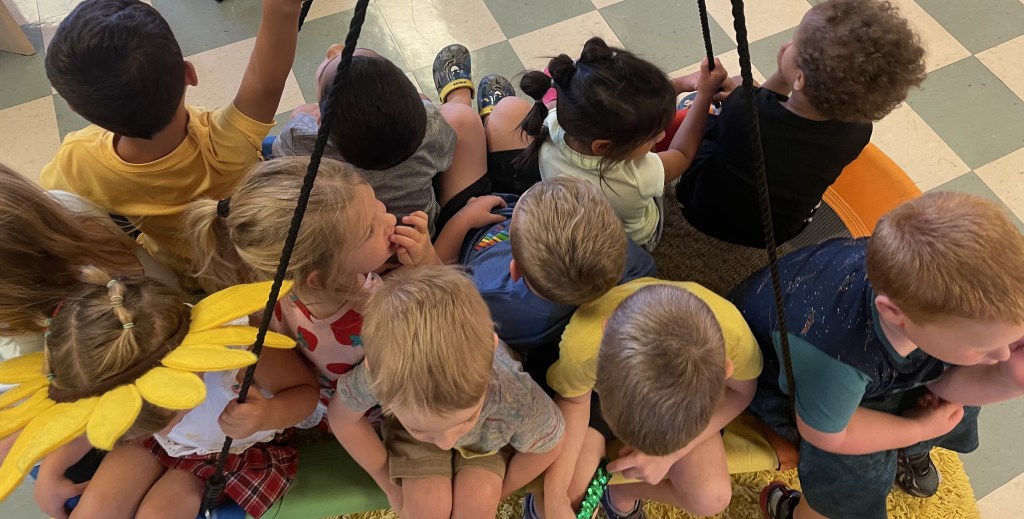
At the end of each class, I put up the big swing which can hold any and all children at one time. There is a wonderful low creaky sound and the children calm quickly while all smooshed together.
The morning class hearing the swing creak.

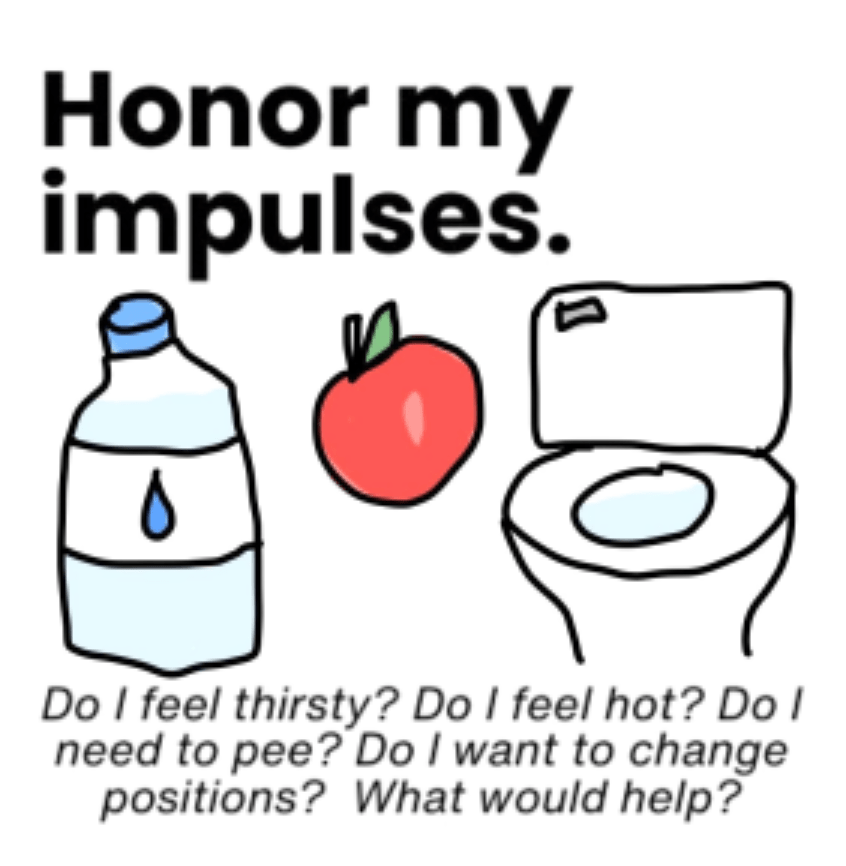
This week we are exploring what it means to “Honor our impulses”. In the first week of school what I want most is for children to feel safe in getting their basic needs met. For instance, they are allowed to get a drink of water, go to the bathroom, take shoes on and off and change positions whenever they like. In this first week of school we will be introducing all the ways that these needs can be met with or without teacher assistance. It is vitally important that children learn to identify their body’s needs and I have complete confidence that by honoring their body’s impulses now, they will be better suited to respond to social norms/expectations as they age (in other words: they do not need to be forced to sit still now so that one day in 2nd grade they will be able to).


This week’s Coping Skill questions you can ask your child:

What do you do if you’re thirsty at preschool? Children can find their cup in the kitchen (they are glass jars labeled with their names and color coded for their class schedule) and either get help filling it or fill it themselves at the fridge water dispenser. If children bring their own water bottle from home they are allowed to use it anytime (and carry it around with them).

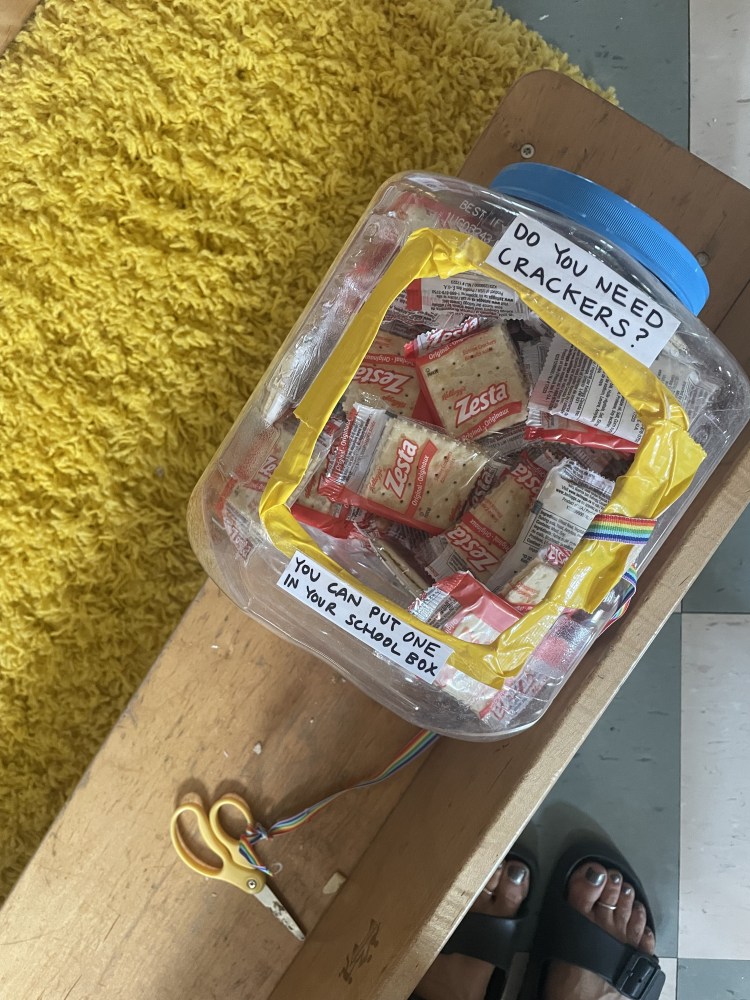
What do your do if you’re hungry at preschool? There will always be food available for hungry children. Sometimes children bring their own food which they are allowed to eat anytime and teachers will help them find a space to eat. We also have saltine crackers and carrots available for a pre or post snack nibble.

What do you do if you’re hot at preschool? Children can remove outerwear, long sleeves, socks, shoes, etc. In warm weather months they can stand under our HVAC vents or use a paper fan. Some children like to have a cold wet paper towel pressed gently on the back of the neck, chest or forehead (and if you blow on the wet skin it is even more of a cool down effect!).

What do you do if you’re cold at preschool? Children can put outerwear on or use one of our many blankets (there are a variety of textures and sizes). In cold weather months they can stand under an HVAC vent to feel the warm air. Cuddling with another person or rubbing their own arms/legs can also meet the need.

What do you do if you have to pee or poop? They go! With the bathroom connected to our classroom there is never a need for children to wait (unless someone else is using it). Children are allowed to go to the bathroom anytime and do not need to ask permission. At the same time, I will always assist children who need or request help with any part of the bathroom experience.

What do you do if you don’t want to sit at Circle Time? They can lay down, stand, get a pillow, etc. What is most important in this skill set is noticing what their body wants to do and honoring it. If a child is uncomfortable for any reason sitting “criss cross applesauce,” I want them to move and adjust.

Circling things, crossing things out, taste testing, swinging and honoring our impulses : WEDNESDAY A WEEK

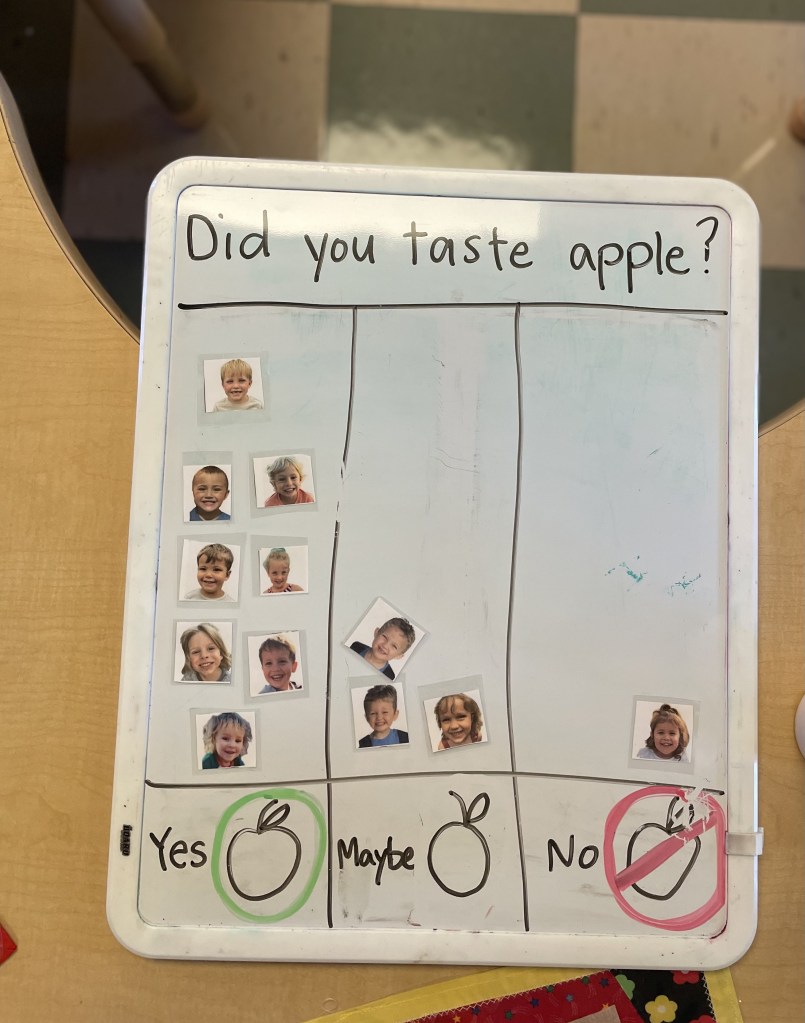
On our second day of the school year, we continued to explore what it means to “Honor our impulses” (see the segment below) and make connections between apples, eating, drinking, digestion, going to the bathroom, etc. Today we talked about our apple preferences, found our afternoon Golden Letter friends and played hard inside and outside (including finding a lot of Golden Rain Tree bugs)! We painted more apples-some to take home and some on the easel for a school project.

Here are 3 questions to learn more about our day:

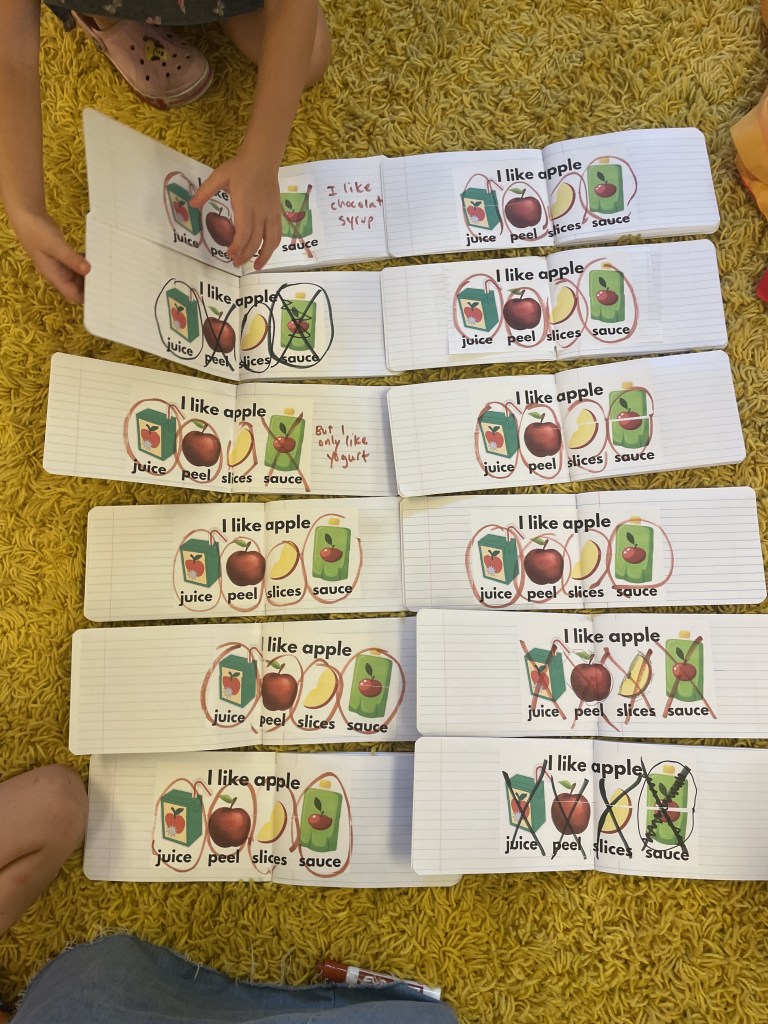
Did you circle or cross anything out in your journal?

In our journals there were 4 pictures of apple products that we could circle if we liked them or cross out if we didn’t. This was another opportunity to honor our preferences. It’s okay if you don’t like applesauce! Cross it out! It’s okay if you like apple slices! Circle it! It’s okay if you like apple peel but only if it’s red. Circle it and a teacher can make a note about it.

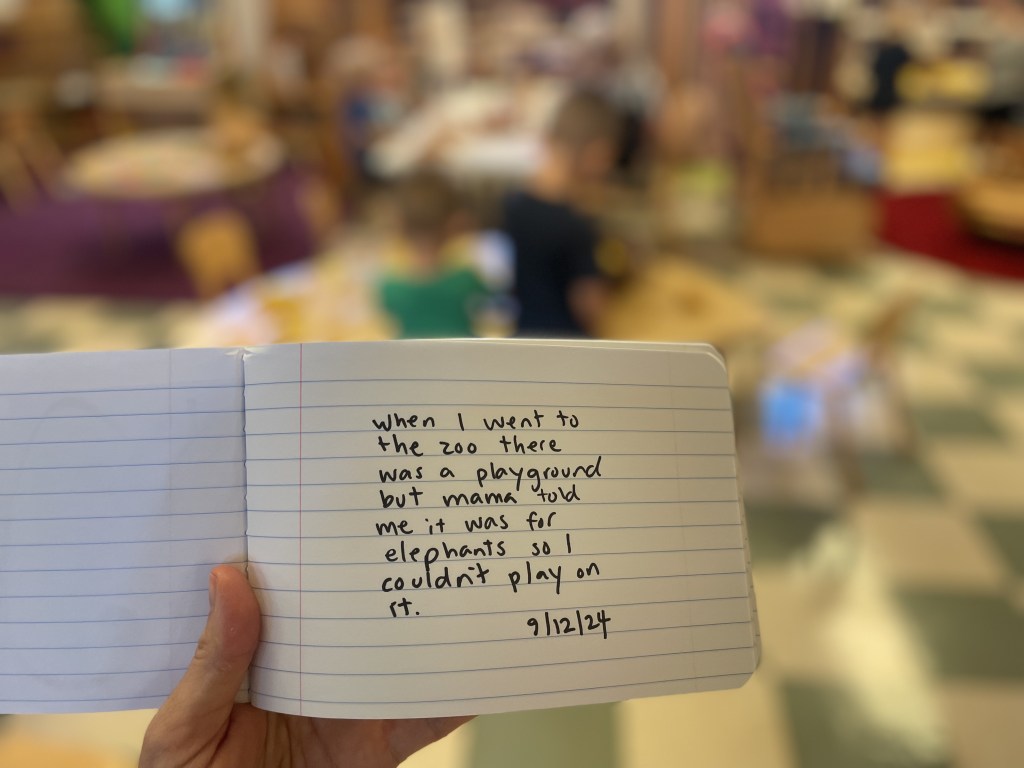
Bonus journal content (children can write in their journals and have teachers write something in their journals anytime):

What did you eat for snack today?

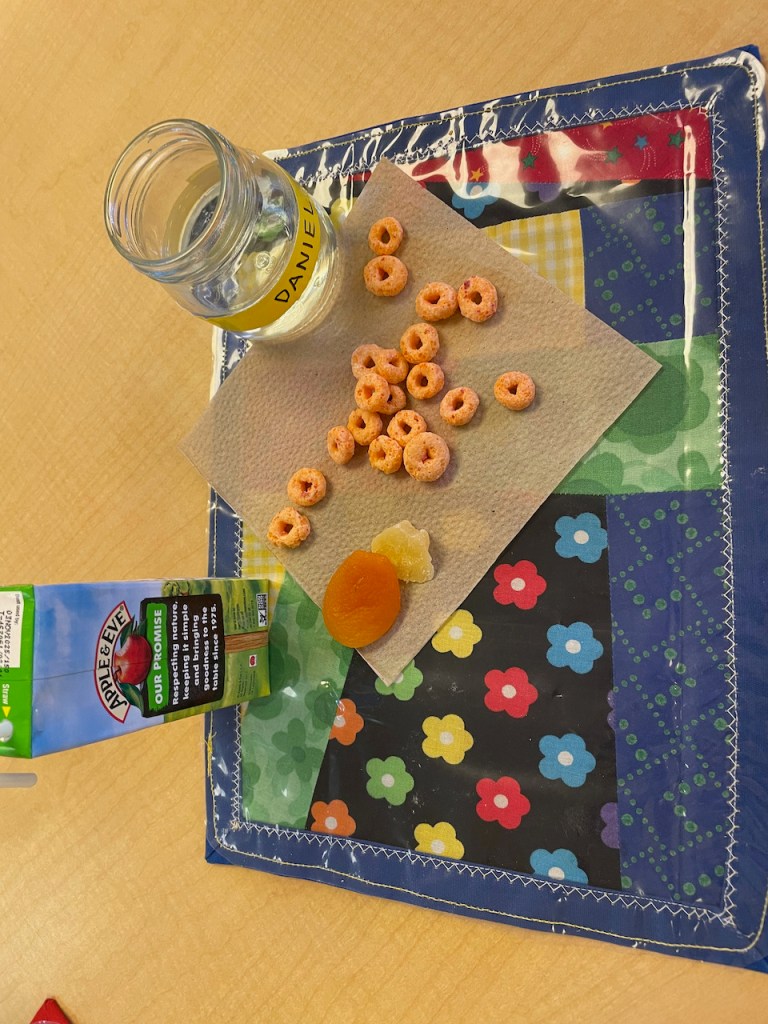
In the morning we had food from Millie: Apple Jacks cereal (to which one friend said, “My family is NOT going to believe this…”), dried pineapple, dried apricots and real apple juice-just like Apple Farmer Annie made!

In the afternoon we had Avery’s summer birthday celebration snack of sandwiches, juice pouches and a taste test with Zander’s fruit snacks.

Thank you, snack friends!

Did you go on a swing today?

One of the favorite spots in our classroom is our indoor swing. While sometimes the swings are for solitary time, today they were for more than one at a time (in the morning class all but 3 friends wanted to get on at once!). It’s a great opportunity to notice what our bodies want and need (faster? slower? too crowded? enjoying being squished?).


This week we are exploring what it means to “Honor our impulses” (and make the connection between apples/ eating/drinking/bathroom/etc). In the first week of school what I want most is for children to feel safe in getting their basic needs met. For instance, they are allowed to get a drink of water, go to the bathroom, take shoes on and off and change positions whenever they like. In this first week of school we will be introducing all the ways that these needs can be met with or without teacher assistance. It is vitally important that children learn to identify their body’s needs and I have complete confidence that by honoring their body’s impulses now, they will be better suited to respond to social norms/expectations as they age (in other words: they do not need to be forced to sit still now so that one day in 2nd grade they will be able to).

This week’s Coping Skill questions you can ask your child:

What do you do if you’re thirsty at preschool? Children can find their cup in the kitchen (they are glass jars labeled with their names and color coded for their class schedule) and either get help filling it or fill it themselves at the fridge water dispenser. If children bring their own water bottle from home they are allowed to use it anytime (and carry it around with them).

An older brother is showing his sister how to fill her water cup.

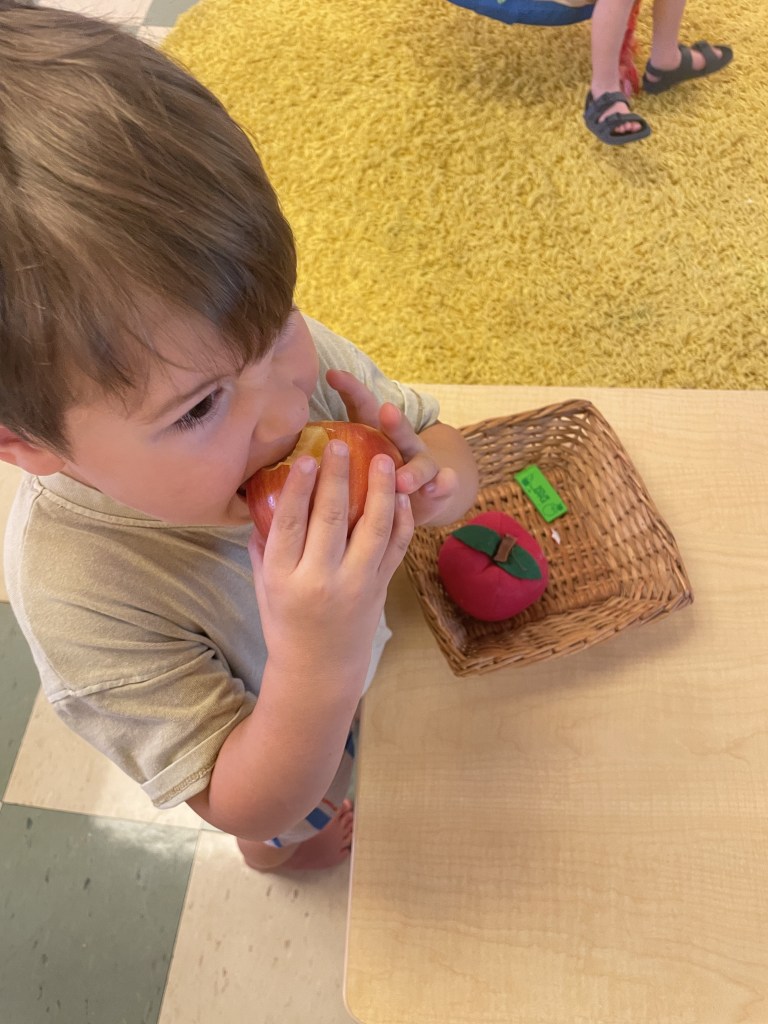
What do your do if you’re hungry at preschool? There will always be food available for hungry children. Sometimes children bring their own food which they are allowed to eat anytime and teachers will help them find a space to eat. We also have saltine crackers and today we had apples available for a pre or post snack nibble.

What do you do if you’re hot at preschool? Children can remove outerwear, long sleeves, socks, shoes, etc. In warm weather months they can stand under our HVAC vents or use a paper fan. Some children like to have a cold wet paper towel pressed gently on the back of the neck, chest or forehead (and if you blow on the wet skin it is even more of a cool down effect!).

Today we read again the book about George falling into the water where HE got cold. What could he do about it?

What do you do if you’re cold at preschool? Children can put outerwear on or use one of our many blankets (there are a variety of textures and sizes). In cold weather months they can stand under an HVAC vent to feel the warm air. Cuddling with another person or rubbing their own arms/legs can also meet the need.

What do you do if you have to pee or poop? They go! With the bathroom connected to our classroom there is never a need for children to wait (unless someone else is using it). Children are allowed to go to the bathroom anytime and do not need to ask permission. At the same time, I will always assist children who need or request help with any part of the bathroom experience.

What do you do if you don’t want to sit at Circle Time? They can lay down, stand, get a pillow, etc. What is most important in this skill set is noticing what their body wants to do and honoring it. If a child is uncomfortable for any reason sitting “criss cross applesauce,” I want them to move and adjust.