
CURRICULUM
PROGRAM PLAN: Per K.A.R. 28-4-427 (c), there shall be a written program plan which includes daily learning experiences appropriate to the developmental level of the children. Experiences shall be designed to develop: Self-esteem/positive self-image, social interaction skills, self-expression/communication skills, creative expression, large/small muscle skills and intellectual growth. The program schedule shall be planned to provide a balance of active, quiet, individual and group activities. New Creation Preschool’s program works to enhance a child’s feelings of being competent and cared for. Our play-based curriculum has influences from the Montessori, Regio-Emilia and Waldorf methods. There is a fine balance between following a schedule and independent times.
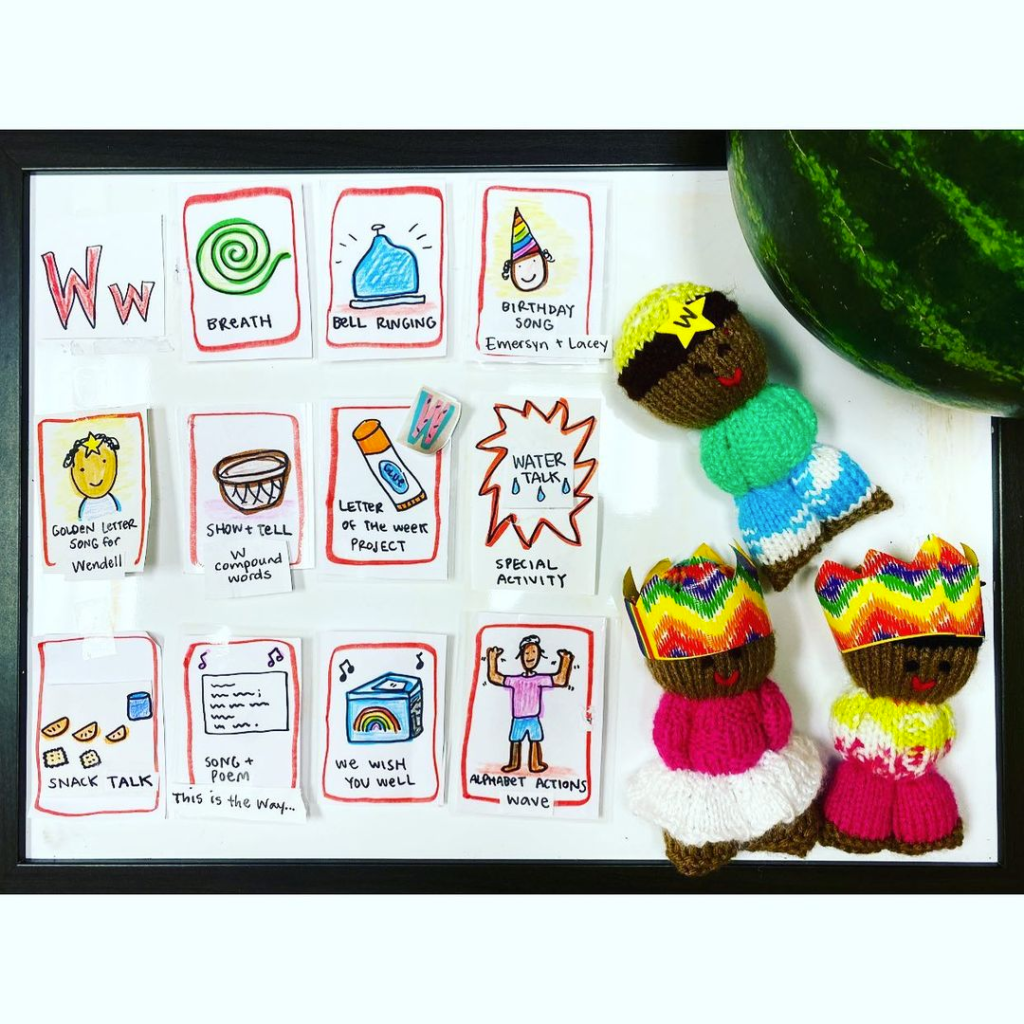
CURRICULUM ELEMENTS: All children are guided through Letter of the Week projects, Journal prompts and Social Emotional Learning activities each week. There is a Book of the Week and accompanying song or poem as well as additional materials and activities offered.
Each child has a School Box of materials (crayons, glue, scissors, journals, snacks, play dough, etc) that we can take with us outside. It is labeled with their name/photo and can be transferred between home and preschool at any point due to quarantine or other extended absences.

THEMES FOR 2022-2023:
A is for Ant (peer pressure)
B is for Basketball (inclusion/accommodation)
C is for Cloud (relaxation)
D is for Dot (individualism)
E is for Eyes (uniqueness)
F is for Fish (real vs make-believe)
G is for Germ (“good” vs “bad” germs)
H is for Hand (helpfulness)
I is for Inch (garden/food sources)
J is for Journal (self soothing methods)
K is for Key (kindness)
Christmas Week (giving and receiving)
L is for Light (ideas)
M is for Martin (non-violent resistance)
N is for Number (comparison/judgment)
O is for Oval (welcoming others)
P is for Pickle (preferences)
Q is for Quarter (leadership)
R is for Rainbow (critical thinking)
S is for Shamrock (season awareness)
T is for Tornado (safety plans)
U is for Up (opposites)
V is for Violet (intense feelings)
W is for Web (fear response)
X is for Xray (compassion)
Y is for Yarn (connection)
Z is for Zig Zag (changing one’s mind/consent)
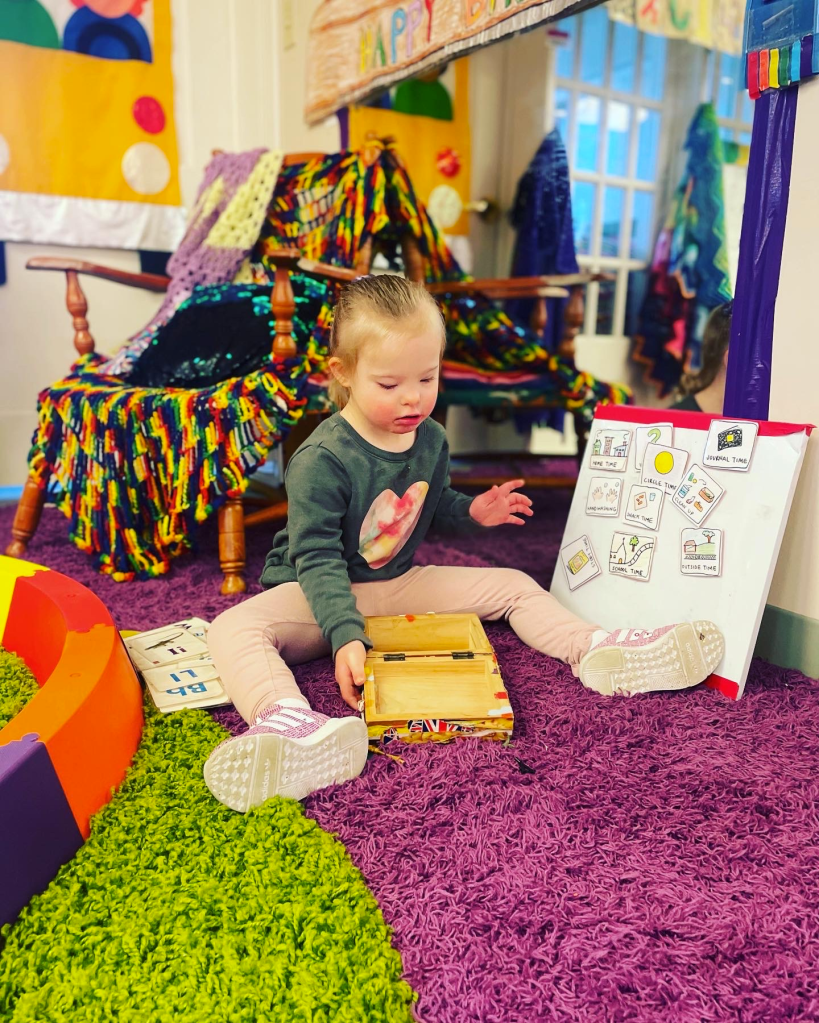
DAILY ELEMENTS AND ROUTINE: While the order may change, here are the things we do each day:
Work Time: this is the time of day when preschoolers play and hone the skill of making choices! Teachers are available to guide activities and offer suggestions as needed. Indoors and out, some activities are always available while others change with the themes.
Circle Time: this is the time of day when we sit together and engage in conversation. Our Social Emotional Learning topic is introduced here with books, songs, drawings and more. We practice many of the school skills that are found in a traditional Kindergarten classroom: calendar talk, alphabet sounds/recognition, name reading, color recognition, patterning, etc. This is also the time of day when we sing songs, play instruments, recite poems and act out fingerplays and rhymes.
Project/Journal Time: this is the time of day when we create something. We ask that children come in clothes that they can get messy in believing it is important for there to be freedom to participate fully. We use lots of paint and lots of glue during the year! Our 2022-2023 curriculum includes an Alphabet Project, Guided Journal Time and extra art projects each week as well as the PROJECT SHELF that children can create from every day they come.
Story Time: this is the time of day when the teacher is reading to the children. Through our stories we are able to introduce new concepts while having children experience the security of being read to. Our books are chosen based on the theme of the day and are connected to the other activities of the day.
Book Time: this is the time of day when we gather together to read books independently with quiet music in the background. Children have access to battery operated candles and practice the skill of taking “picture walks” through books. Children also experience teachers reading alongside them during this restful time.
Snack Time: We use this time to relax, visit and try new foods in a safe way (at preschool you are allowed to smell, lick, taste and even spit out things you don’t like). We make connections to the themes of the week (“These cheerios are like the wheels from our book! We’re eating rabbit food -carrots and lettuce! The crackers are the same shape as our book! Everything is the Color of the Month! Everything starts with the Letter of the Week!.”).
Big Body Time: this is the time of day children are invited to use their large muscles. In addition to the natural opportunities, each day there are special “Big Body” activities planned. Specifically designed for preschool aged children, examples include a variety of swings, balancing beams, wiggle boards, ride-on devices, yoga poses, etc.
Clean Up Time: this is the time of day we help put things away in the classroom and playground. We play music and remind preschoolers that we aren’t cleaning up just what we played with, but whatever our classroom and playground needs!
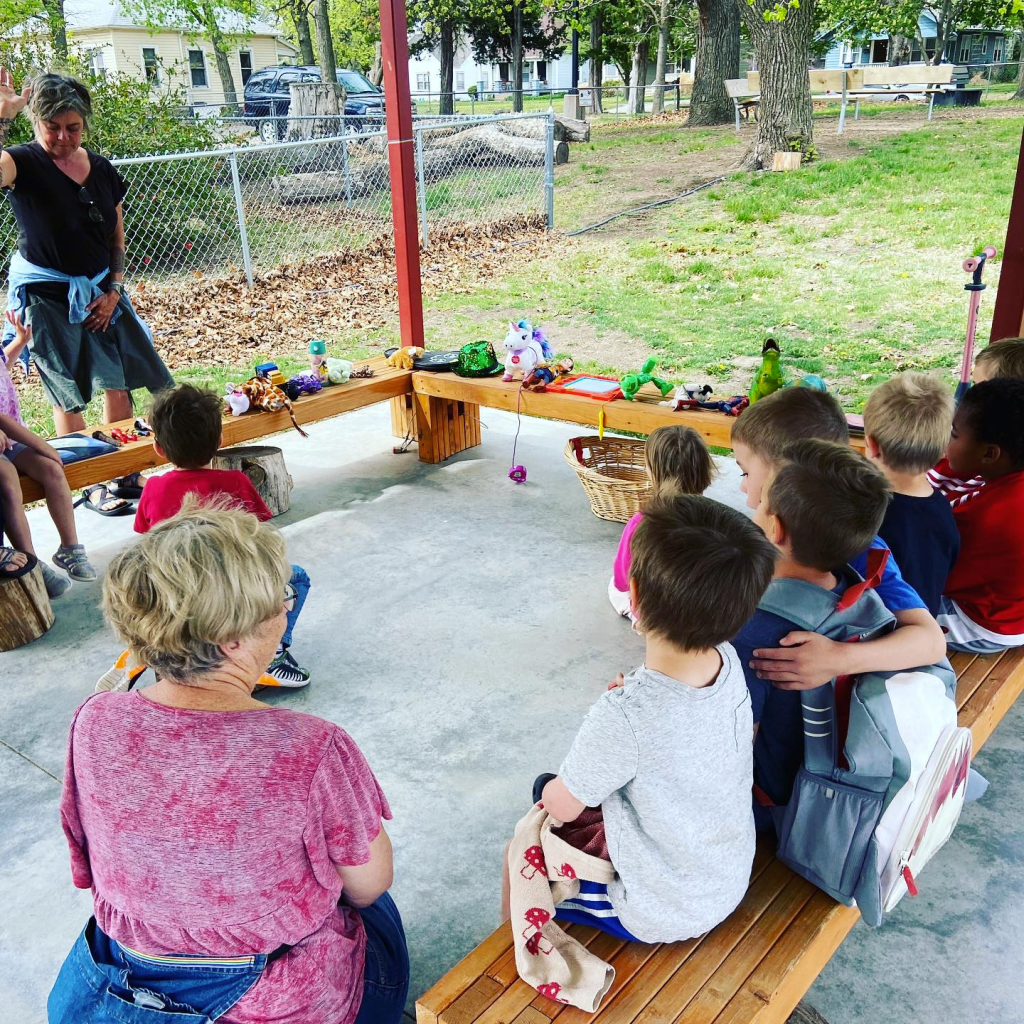
OUTDOOR PROGRAM: We have a large outdoor area known in the community as the New Creation Memorial Park. We spend time outside in most kinds of weather believing that a connection to nature is essential to a whole early childhood experience! It is enclosed by a fence with play structures, climbing logs, benches, water play, a permanent open air pavilion (installed summer 2021) and many trees. The ground cover under play structures is KDHE approved pea gravel (rather than sand or plastic) and the majority of our space is grass. The playground and shelter are fully accessible via sidewalk. We maintain compliance with all regulations according to K.A.R. 28-4-437 including:
- Staff is equipped with a megaphone/voice amplification, cell phones and a first aid kit
- We shelter indoors during extreme temperatures or lightning/storms in the area
- The fence gates are monitored at all times by teaching staff
- Children are accompanied to the indoor bathroom as needed by Ms Kristin or Ms Brenda
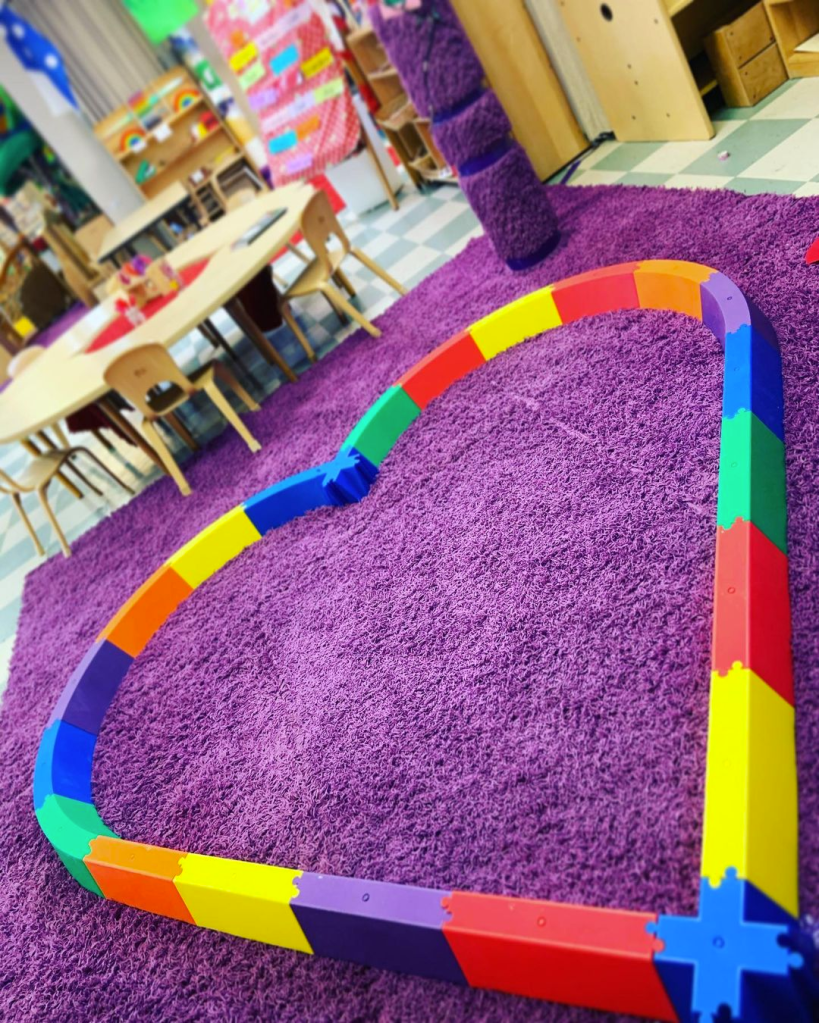
INDOOR LEARNING AREAS: Our classroom is carefully arranged with areas/centers clearly defined, each housing a variety of materials. Tables and chairs are available in each area. We have a large carpeted area for “Circle Time” designated as a space for the whole class to gather. Our areas/centers include:
Cubbies: each child has an open “locker” style cubby for personal items that can also serve as their own “quiet space” if they are ever looking to retreat to their own space. Name recognition of self and peers is naturally encouraged due to labels and photos of each child.
Block Center: our block area houses a full set of wooden unit blocks, toy vehicles, plastic animals and a dollhouse with furniture and people in low open shelving.
Puzzle Corner: this is a math/manipulative area that offers a variety of materials including puzzles, small blocks, Legos, games, tiles, geoboards, attribute blocks, and other hands-on materials that foster children’s thinking and problem-solving skills and support the development of the big ideas of math that are appropriate for young children
Book Corner: we have a book display shelf that contains a variety of books arranged by areas of interest and difficulty level. Books are rotated at least monthly according to children’s interest/curriculum themes. Children have access to battery operated candles and practice the skill of taking “picture walks” through books.
Project Shelf: this is a writing/drawing/creating area that provides different types of paper, writing/drawing materials (crayons, markers, pencils), stamps, stencils, alphabet charts as well as glue, scissors, stamps, paint and brushes.
Nature Corner: this is a science area that includes magnifying glasses, scales, books and other items from the natural world (such as plants, rocks, shells, leaves, bones, etc.).
Family Corner: this is a dramatic play area that is used most often to play “house.” There is a fully equipped play kitchen, table and chairs, dolls, dress up clothes, books, office supplies and stuffed animals.
Loft: we set up this area to re-live and reflect the ideas and understandings of the particular curriculum focus of the class by turning it into a store, post office, train station, doctor’s office, etc.
Sensory Play: we have a table designated as a play dough table where assorted materials and tools (rolling pins, play dough scissors, cutters, etc) are available. We incorporate other sensory experiences in our Tub Tables (water, sand, rice, etc.) and tools (cups, tongs, funnels, etc).
Tiny Things: we have a table that holds hundreds of tiny things for each Color of the Month. Children use their fine motor muscles in manipulating them and sorting them, gaining strength and dexterity.
Swing: we have a 2000+ pound weight bearing indoor adaptor for a variety of swings that help meet the physical/sensory needs of many children.
 newcreationpreschool.com